Science
Before There Are Planets, There Is Dust
16 October 2026





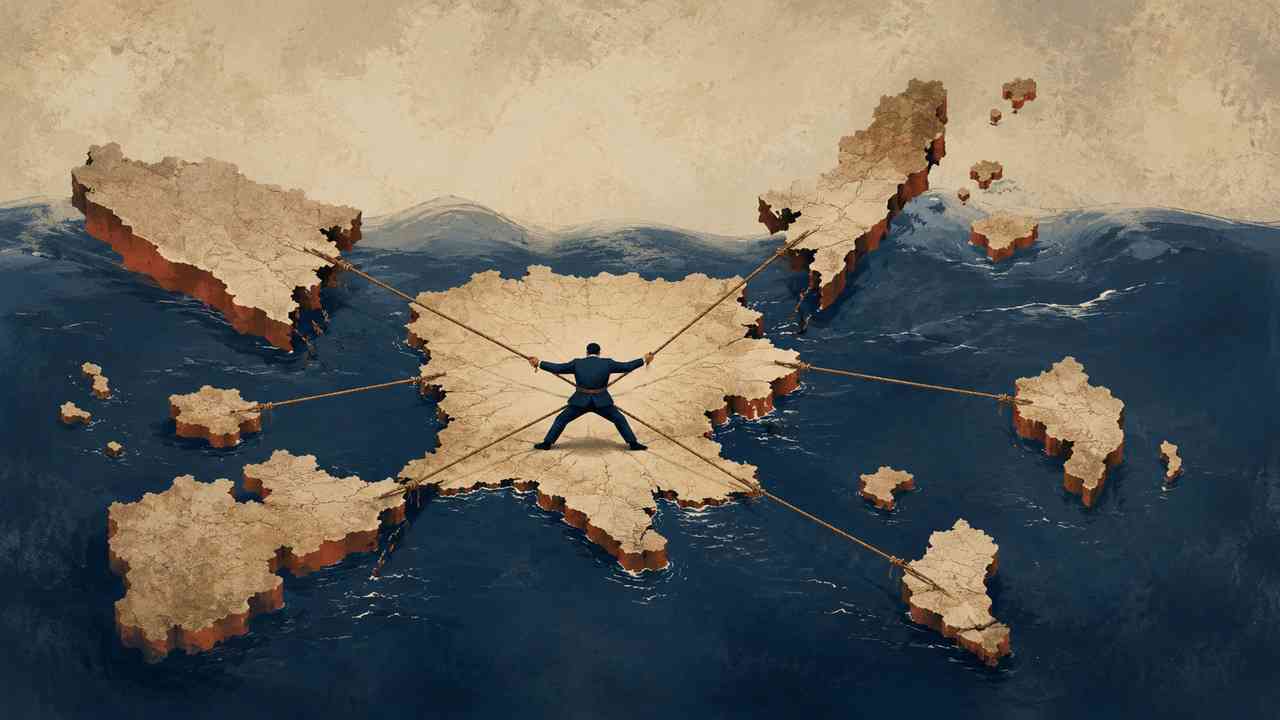
On the map, strategic territories look like prizes: Spanish cities in Africa, Greek islands almost touching the Turkish coast, or the British Falklands at the far end of the world. The problem begins when someone has to defend them. Geography can give a state an advantage, but it can just as easily present a bill that cannot be avoided.
On the one hand, these two points offer a reason for pride. Because of them, the Spanish state extends across two continents: Europe and Africa, not counting the Canary Islands, which do not lie in continental Africa. On the other hand, these two scraps of Spain on the southern coast of the Mediterranean remain a recurring geopolitical headache. We usually hear about Ceuta and Melilla when another migration crisis breaks out, or when tensions escalate with Morocco, which challenges Spain’s sovereignty over the two enclaves. From Spain’s point of view, they are exclaves.
Incidentally, the Spaniards should understand the Moroccans perfectly well here. After all, Spain itself challenges British sovereignty over Gibraltar, which almost mirrors the situation of Ceuta and Melilla.
Both autonomous territories give Spain prestige and a strategic foothold on both sides of the Strait of Gibraltar. This applies directly to Ceuta, since Melilla lies roughly 220 kilometers southeast of that key strait in a straight line. At the same time, however, both territories remain “hostages” of relations with Morocco, which can become extremely tense.
In July this year, tens of thousands of migrants crossed from Moroccan territory into Ceuta, and much suggests that the Moroccan authorities at least allowed the situation to happen. Final conclusions will have to wait until the entire matter receives a thorough investigation.
Residents of Melilla saw similar scenes, though on a smaller scale, four years ago.
The worse relations between Spain and Morocco become, the greater the risk that these two Spanish territories will feel the consequences, whether minor or serious. And at times, things between the two states grow genuinely heated. In 2002, they even came close to a military confrontation over the island of Perejil — “parsley” in Spanish — located near the coast of Ceuta.
That brief, bloodless “war over Parsley” reminded the Spaniards, although they ultimately got their way, that Morocco still has its eye on their African “pearls” in the crown, and that geography is absolutely not on Spain’s side here. Five years later, when the then king Juan Carlos visited Ceuta, Morocco shook with outrage. Rabat recalled its ambassador from Madrid for consultations, and a crowd of demonstrators gathered near the border with Ceuta.
One banner demanded: “King Juan Carlos, get out of Moroccan Ceuta and Melilla.” Since then, Spanish monarchs have not visited these African territories that belong to their kingdom. Juan Carlos’s successor, King Felipe VI, has signaled that he very much wants to visit Ceuta, but for now Spanish authorities prefer not to irritate their southern neighbor in this way.
“If we divided these fees among Indonesia, Malaysia, and Singapore, that would really be something, wouldn’t it?”
Indonesia’s finance minister, Purbaya Yudhi Sadewa, said excitedly during a symposium in Jakarta this spring. The Indonesian politician was, of course, referring to Iranian demands to turn the Strait of Hormuz into one giant toll point.
However, Indonesian authorities quickly distanced themselves from the minister’s words and stressed that they had no intention of charging shipowners using the Strait of Malacca, the busiest strait in the world. More ships pass through it than through the Strait of Hormuz.
Its position on a strategically vital strait for global trade gives Indonesia potentially significant leverage. Yet the island character of the state also creates an enormous security challenge.
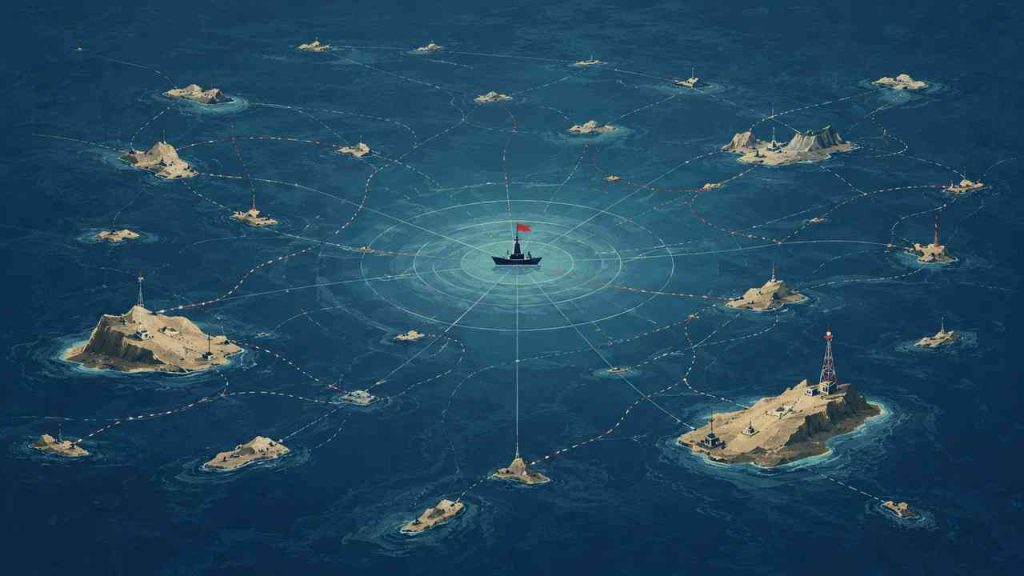
Indonesia, the world’s largest island country, consists of 17,000 islands. It stretches more than 5,000 kilometers from east to west and, at its widest point, measures more than 2,000 kilometers from north to south. Indonesian authorities have tried for years to strengthen the navy and the air force, but securing such a vast archipelago would challenge even a much wealthier state.
Indonesia’s previous president, Joko Widodo, pointed to the challenges linked to the “tyranny of distance” when he visited the Moluccas in 2022, the island group farthest to the east.
“The most isolated islands in this region must be included in our defense plans,”
the Indonesian president said during that visit, drawing attention to his country’s difficult geography. This matters especially today, as Beijing acts increasingly boldly in waters far south of its own coast, moving dangerously close to the northern borders of Asia’s island giant: Indonesia.
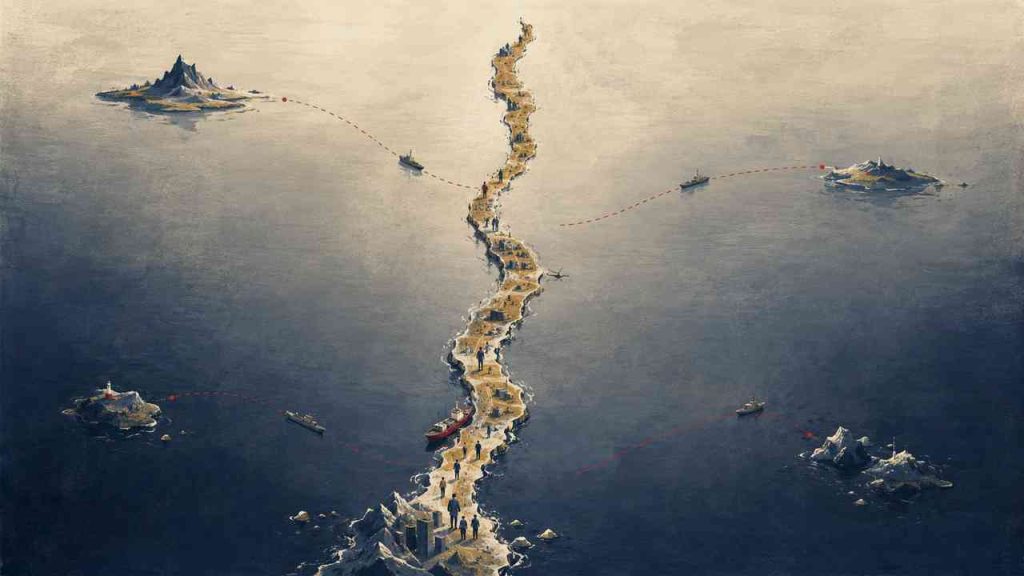
In this context, Indonesians certainly understand the Greeks’ problems very well. Many Greek islands, including the most famous ones — Rhodes, Kos, and Samos — lie just a few to a dozen kilometers from the coast of Turkey, Greece’s archrival. Both states belong to NATO, but their tense relations, including territorial disputes, and the constant arms race between them remain a headache for the Alliance’s headquarters.
In antiquity, the islands off the coast of Asia Minor gave the Greeks ideal springboards for building influence on the continent. Today, however, such difficult geography is above all a military problem. Some islands lie hundreds of kilometers from mainland Greece. Turkey could seize them using ordinary pontoons to transport soldiers, which means heavily indebted Greece must maintain sufficient naval and air capabilities.
Meanwhile, just off the shores of Greece’s easternmost islands, the Turkish “tiger” is developing a powerful, technologically advanced army in a country with nine times Greece’s population.
“Why did the Argentine authorities urgently summon Chile’s ambassador? Because the Chilean army was spotted on the border.” This is one of many jokes about the very specific geography of a country that looks like a long ribbon. Another joke goes: “The only reason Chile exists? To cut Argentina off from the Pacific.”
Yet appearances deceive. Chile’s unusual shape — more than 4,200 kilometers long, with an average width of around 180 kilometers — does not mean that security is the country’s greatest problem. The mighty Andes greatly help Chilean military planners by protecting the country from the east. The Atacama Desert also sharply limits any potential military operations from the north.
Difficult geography causes Chileans the greatest problems economically and, quite simply, in everyday life. Huge distances from north to south mean, above all, high transport costs for goods and people. On top of that, the entire infrastructure has to be maintained in extremely demanding conditions: in the Andes, across desert terrain, and in beautiful but exceptionally difficult Patagonia, with its breathtaking fjords.
Great distances also pose a huge problem for two of our European allies: France and the United Kingdom. Britain learned this painfully 44 years ago, when Argentina, mentioned in the jokes above, decided to take the Falkland Islands from London. Argentines call them the Malvinas; incidentally, it turned out then that Argentina’s neighborhood is not always peaceful.
To retake this British overseas territory, Margaret Thatcher’s government had to take an enormous risk by sending a strike group led by two aircraft carriers almost to the other end of the world, 13,000 kilometers from London. That huge effort ultimately paid off, because the British retook the rocky islands inhabited by 2,000 people. But it also showed how costly it can be to maintain distant remnants of empire.
When I spoke about that war two years ago with Sir Andrew Roberts, the military historian and member of the House of Lords who continues to call in the British Parliament for higher defense spending, he told me that if Argentina attacked the Falklands today, Britain would not be able to send such a strike group there.
As a result, the British can only count on the Falklands garrison, strengthened after that war and including fighter aircraft, to deter Argentina effectively.
The French face a similar problem. Their overseas territories, scattered across the globe, may cause Paris serious trouble in a world undergoing tectonic geopolitical change. French Polynesia, a Pacific jewel, lies almost 16,000 kilometers from Paris. In other words, it sits even farther from the metropole than the Falklands do from the British Isles.
As a new regional hegemon casts its shadow over the Pacific, such immense distance and all the problems that come with it may once again show that difficult geography has its price. Strategic territories may look like assets on a map, but when power shifts and distance begins to matter, they can become liabilities that no state can ignore.
Read this article in Polish: Imperia przemijają, problem zostaje. Cena terytorium na końcu świata


Journalist with a degree in American studies, writing mainly about foreign policy and history. Author of numerous reports on international issues and interviews with leading experts in the field of economy, geopolitics and history. Since March 2023, editor-in-chief of the monthly "Historia Do Rzeczy".



Zmień tryb na ciemny