Science
Before There Are Planets, There Is Dust
16 October 2026





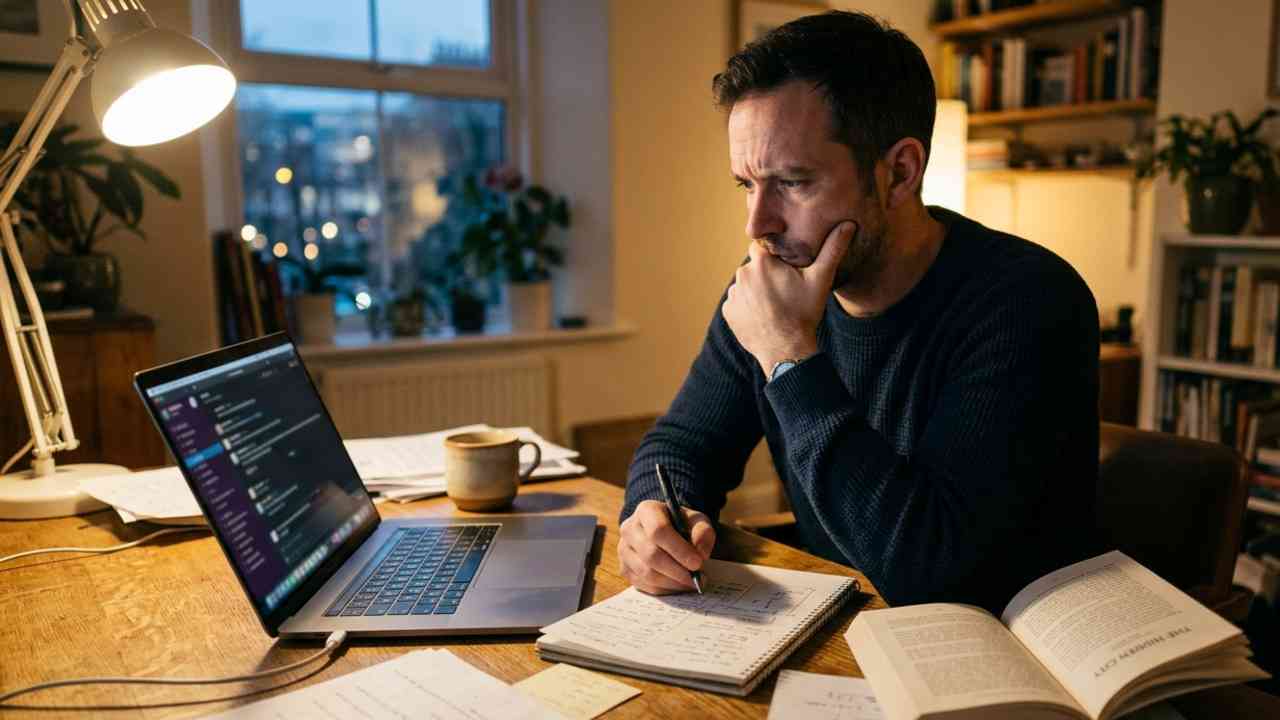
The greatest temptation in using AI is not that it will do something for us. It is that it will lift from us the uncomfortable duty of checking. Andrzej Kucybała writes about AI and human judgment in a world where a quick answer may prove more costly than no answer at all.
This question is being asked more and more often by a growing group of people wondering where the rapid development of artificial intelligence may lead us. I am not a computer scientist. I am a musician who, with considerable life experience behind me, watches the world around me and the development of our digital civilization with interest.
And to make things absolutely clear for the reader: I am not opposed to AI. I use it myself, and I use both a computer and a smartphone in a fairly advanced way. But I have not yet surrendered to the thoughtless acceptance of knowledge delivered to me by AI. I check every message, every piece of information I obtain, looking for confirmation in other sources, preferably books. Perhaps this habit, even this reflex, was instilled in me in my youth, when until the 1990s I lived under the intrusive and deceitful propaganda of the Polish People’s Republic.
Unfortunately, I watch with alarm as today’s world, especially the world of young people, becomes a world of computer illusion, AI, and a lack of skill in inquiry and the search for truth. Today, on the internet and across social media, we no longer face that crude, deceitful party propaganda. Yet in my view it is equal to the socialist-communist propaganda of the past, and perhaps even more refined. It contains a grain of truth, but also lies and manipulation. The difference is that today we can check it. Back then, we had only our instinct for self-preservation and the “doubt” our parents had taught us.
The most urgent task for education is to teach young people that in the contemporary world the words “I doubt” and “I seek the truth” should accompany them at every step.
The threat does not lie in the fact that AI replaces the human being. The danger lies in a much deeper problem. AI can lead to a weakening of independent thought, something we are already beginning to notice as it happens before our eyes, along with a deterioration in problem-solving skills and an excessive dependence on technological development. Young people are slowly losing self-control, surrendering and thoughtlessly making decisions suggested to us by AI.
Such a situation is nothing other than the dream of a criminal politician who, through AI, rules our minds and makes decisions for us. True, this “politician” is virtual, but it is only a small step from there to its use by a politician who wants to dominate the world. Is that what we want?
After all, even today we already experience criminals using AI to create more effective hacking attacks, phishing schemes, and automated online fraud.
Even in the field of functional music, nearly 80 percent of the tracks accompanying advertising spots today are products of AI. Observing the pop music market closely, I suspect that AI also plays a serious role there. And even in this seemingly marginal field, we hand AI room to act without struggle or resistance. Our decisions are simply governed by convenience, time, and quick money.
Have we already crossed the Rubicon by entrusting AI with a leading role in making all kinds of decisions, some of them relatively insignificant for our existence, and others quite the opposite — for example in medicine, where a deliberately introduced false diagnosis could have tragic consequences because we have handed AI total control over our lives? Wrong or deliberate decisions made by algorithms can have serious consequences not only for our health.
If AI receives the authority to make decisions in transport and the justice system, and if deliberately distorted algorithms enter those systems, it may multiply these negative effects. How should we control that? We have not yet learned. Time is running inexorably, and we should do everything we can to reach the finish line healthy and happy before AI begins steering our lives.
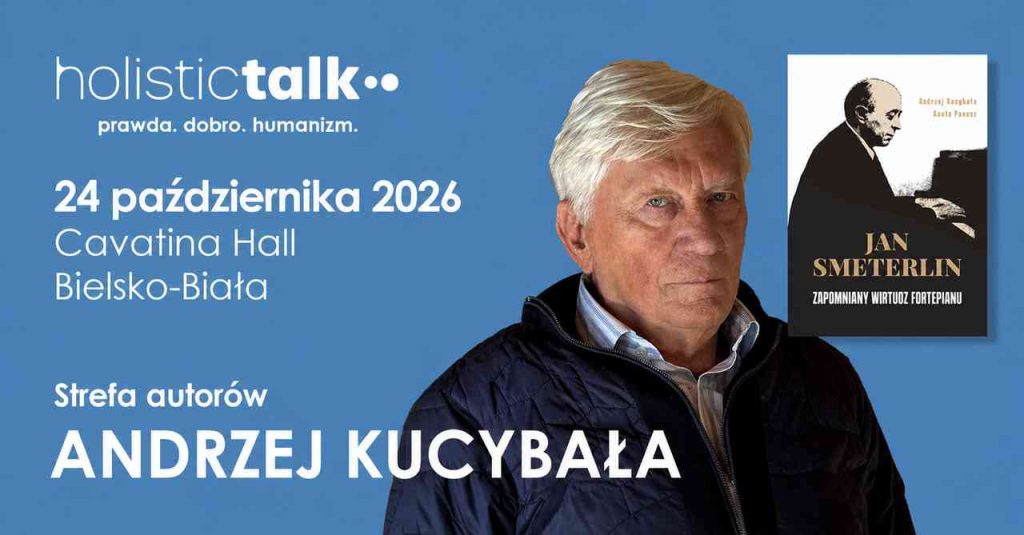
AI systems collect enormous amounts of personal data. Can we imagine a system installed in our environment, trained on biased data, making decisions that harm us instead of helping us — while repairing the damage becomes impossible? After all, we already experience AI models producing highly realistic texts, images, videos, and voice recordings. These can be used to spread false information, commit fraud, and influence public opinion.
To what extent are we already experiencing this today? Most of society is not even aware of it. AI is not infallible, and false data introduced into a system can weigh directly on our lives. Several years ago, one of the creators of AI said: “Humanity will perish if AI learns to create lies on its own and use them in its algorithms.” Are we not already at the beginning of this road toward self-destruction?
Sometimes we realize too late that AI and automation will replace people in many professions, especially those connected with repetitive tasks. We are glad that, on one hand, this will make professional life easier and bring savings. But on the other hand…
Exactly: on the other hand. A new problem emerges — unemployment and the need to retrain thousands, perhaps millions, of workers. Are we prepared for this organizationally and mentally? It seems we still believe that we control AI, lulled by the idea that it is only a machine and that we can disable it at any moment. Yet perhaps such power and skill exist only in science fiction films. Reality may prove much darker.
In the near future, one more, even more serious problem will arise: the creation of autonomous weapons systems. The development of such technology will increase the risk of international conflicts and make control over the use of force much more difficult. A criminal technology without control. Will we be able to master it? The few threats I have listed are probably only the tip of the iceberg.
I am not a specialist, and I cannot speak about these dangers with scientific authority. My perspective is that of a layperson concerned with the issue for purely human and social reasons. Nor do I know which paths in the development of AI technology will bring us benefits, and which may threaten our very existence.
These issues are not only matters of ethics. They concern responsibility for decisions made by AI. They also concern the need to protect human rights and to set limits on the use of this technology in various, sometimes highly sensitive, areas of life. Today, AI is entering every corner of our lives, even the most intimate ones. Perhaps it is time to draw clear boundaries within which we define and determine which AI activities are, and will be, useful for our development, and which must be absolutely forbidden.
Artificial intelligence has enormous potential, but its development requires proper legal regulation, oversight, and responsible use. This would allow us to reduce the threats while also drawing the many benefits offered by this modern technology.
The computer and the human being are not two enemies. But they may become enemies if we allow society to unlearn the critical habit of looking at the world around us, with particular attention to modern technologies. That is why AI and human judgment cannot be separated: if the machine gives answers, the human being must still know how to doubt them.
Read this article in Polish: Andrzej Kucybała: Czy człowiek jeszcze umie wątpić?

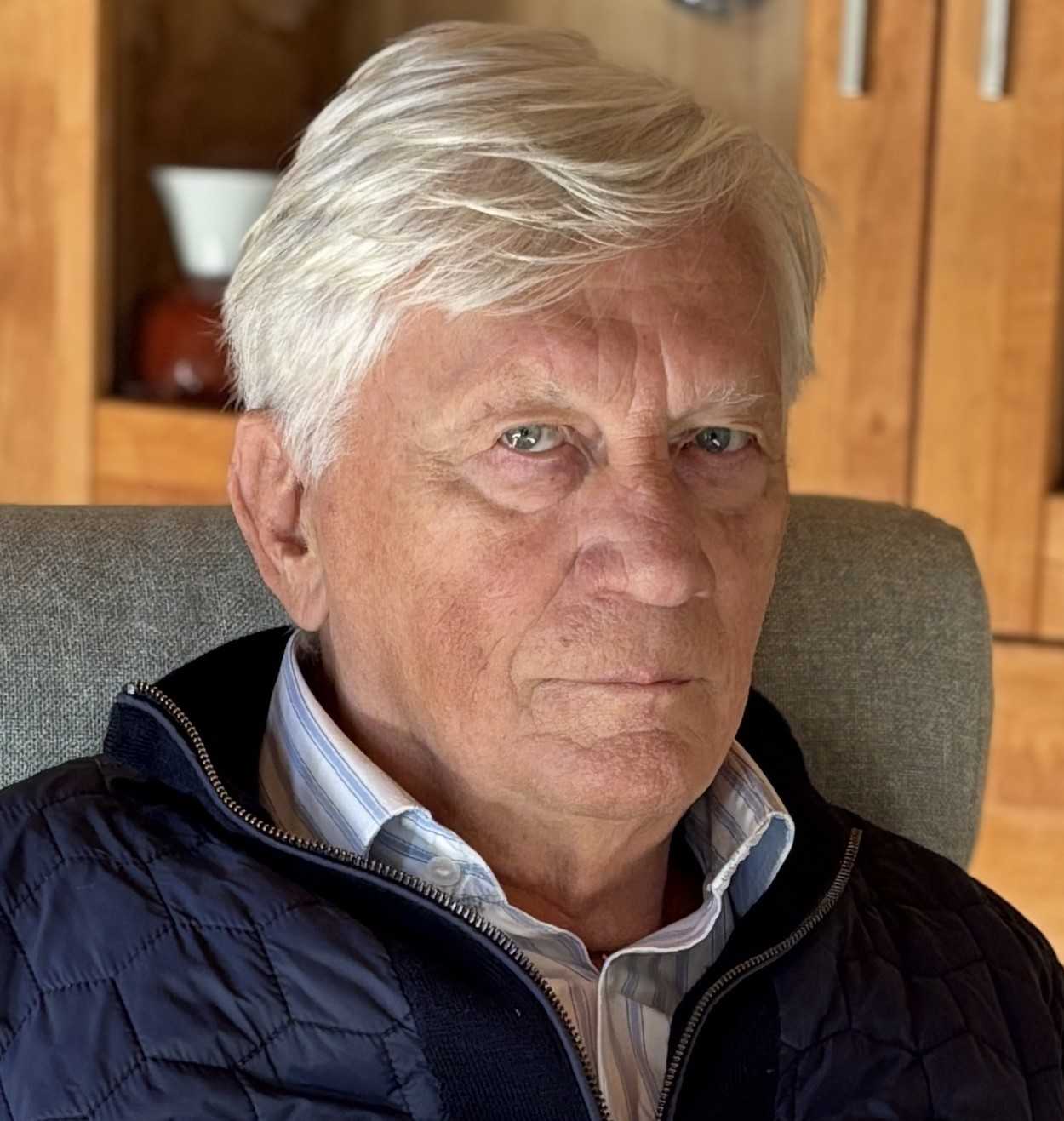
Polish conductor, educator, and cultural manager. He founded and led the Symphony Orchestra in Tarnobrzeg and also co-organized prestigious music festivals. He served, among other roles, as conductor and artistic director of the “Lasowiacy” Song and Dance Ensemble. He also headed the Stanisław Moniuszko Music School Complex in Bielsko-Biała, transforming it into one of the country’s leading artistic institutions. He was honoured with numerous distinctions, including the Knight’s Cross of the Order of Polonia Restituta, the Gold Cross of Merit, and the Silver Medal for Merit to Culture “Gloria Artis.”


Zmień tryb na ciemny