Science
Before There Are Planets, There Is Dust
16 October 2026





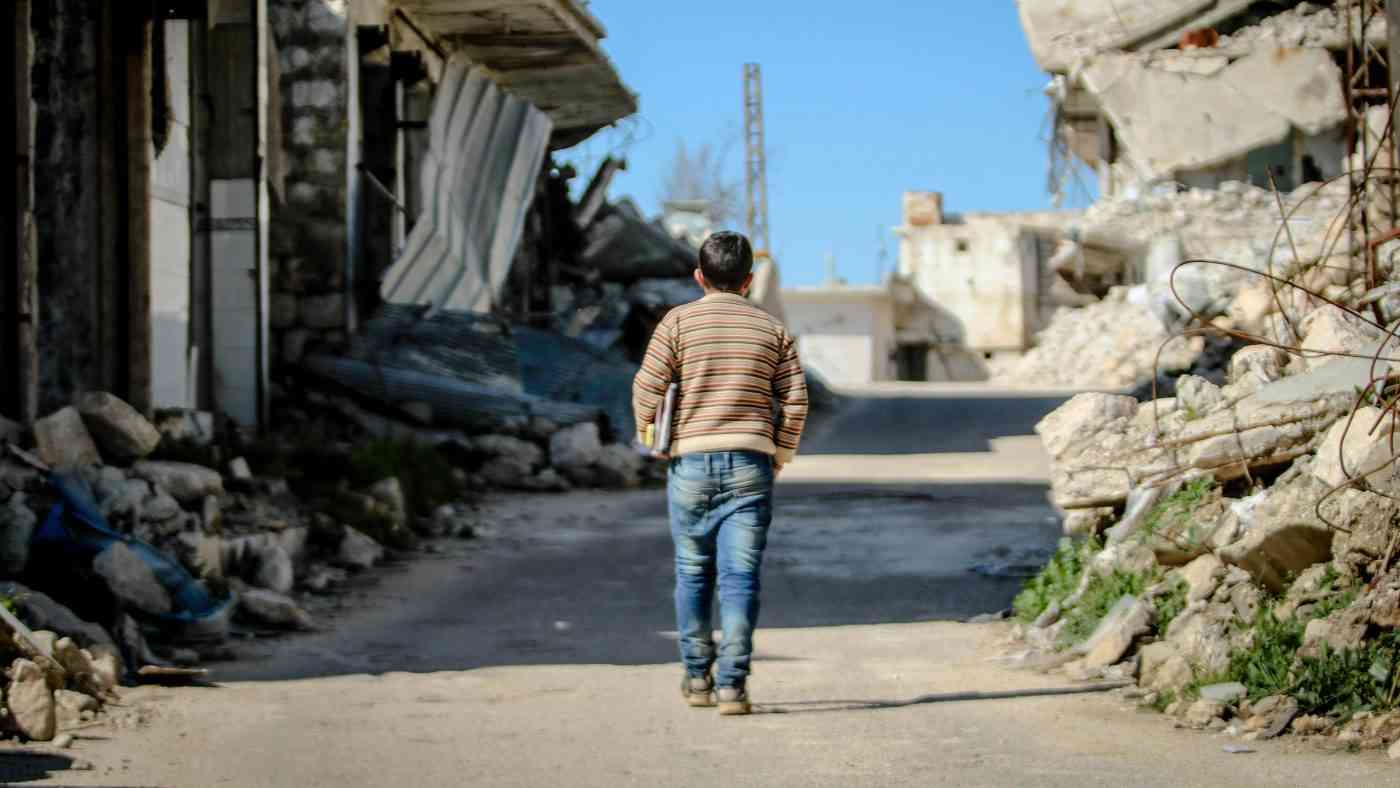
Children of war lose far more than homes. They lose the ability to trust. When bombers and basement fear become everyday reality, a growing generation learns only one rule: survive at any cost. Can a free and stable society emerge from people raised in constant terror?
Children of war grow up in a double darkness. The physical one — the darkness of basements and shelters — and the internal one, where imagination no longer builds tomorrow but endlessly replays yesterday’s explosion. School, if it exists at all, is more often a place of evacuation than learning. The home becomes a temporary refuge that can disappear at any moment. In such conditions, children learn the world through signals of danger. Trust becomes a luxury, and vigilance the primary virtue.
Recent UN and UNICEF reports confirm this, painting an alarming picture of a mental health crisis among children. Organizations working with children in Ukraine warn that without long-term psychological support, an entire generation may carry wounds that will shape the country’s future for decades.
The situation in Gaza is even more severe, where virtually all children require psychological assistance. This means we are no longer speaking about isolated cases, but about an entire generation raised in the logic of siege.
When a child experiences from the beginning that nothing is permanent, it is difficult to expect them to believe in the stability of any social order. A child who sees their home stop being a safe space, and adults stop functioning as protection, undergoes a fundamental crisis of trust in reality itself. What philosophers once called the “order of things” appears, from the perspective of children of war, as the whim of blind fate: today you live, tomorrow you may not.
Trust — in people, institutions, and sometimes even in meaning itself — ceases to be a natural condition and becomes a privilege. Children of war learn that one must be cautious before one can be kind. Their first ethics is an ethics of survival: survive, protect those closest to you, do not trust too quickly. Whether this survival ethics is balanced in time by another ethics — one of dialogue, care, and cooperation — determines whether a future society will be capable of peace.
I am not what happened to me, I am what I choose to become.
— Carl Gustav Jung
The future generation of Ukrainians and Palestinians will face a dramatic question: what should be done with one’s own suffering? At least two paths are possible. The first is to make suffering the core of identity: “I am someone who has been wronged,” and therefore someone entitled to retaliation. The second — more difficult — is to acknowledge pain while refusing to repeat violence: “precisely because I know how it hurts, I do not want to do this to others.”
History knows both scenarios. After the Holocaust or the genocide in Rwanda, some generations chose healing and reconciliation. Others entered cycles of violence. Much depends on how trauma is named and narrated.
Viktor Frankl, who survived the concentration camps, wrote:
If life has any meaning at all, then suffering must have meaning as well.
These words are not consolation — they are a call to responsibility. Trauma can become a teacher, but only if adults help children give it meaning. Children of war are not condemned to permanent wounds. They may become a generation that understands the value of peace more deeply than others, because they paid its highest price. But only if their suffering is recognized, heard, and cared for. Otherwise, they may become a generation of anger, left alone among ruins and broken promises.
A democracy built by people who never experienced the world as safe will likely be cautious, defensive, and primarily focused on security. It may become wiser — if fear transforms into sensitivity toward violence. Or it may become more authoritarian — if the logic of a besieged fortress becomes permanently embedded in collective imagination.
The stakes in how we treat children of war today are therefore not only about their individual futures. The real stake is the shape of the political systems they will one day create.
Read this article in Polish: Pokolenie bez jutra. Jak wojenne traumy blokują demokrację

A Journalism and Social Communication graduate with 15 years of experience in the media industry. He has worked for titles such as "Dziennik Łódzki," "Super Express," and "Eska" radio. In parallel, he has collaborated with advertising agencies and worked as a film translator. A passionate fan of good cinema, fantasy literature, and sports. He credits his physical and mental well-being to his Samoyed, Jaskier.


Zmień tryb na ciemny