Science
Before There Are Planets, There Is Dust
16 October 2026





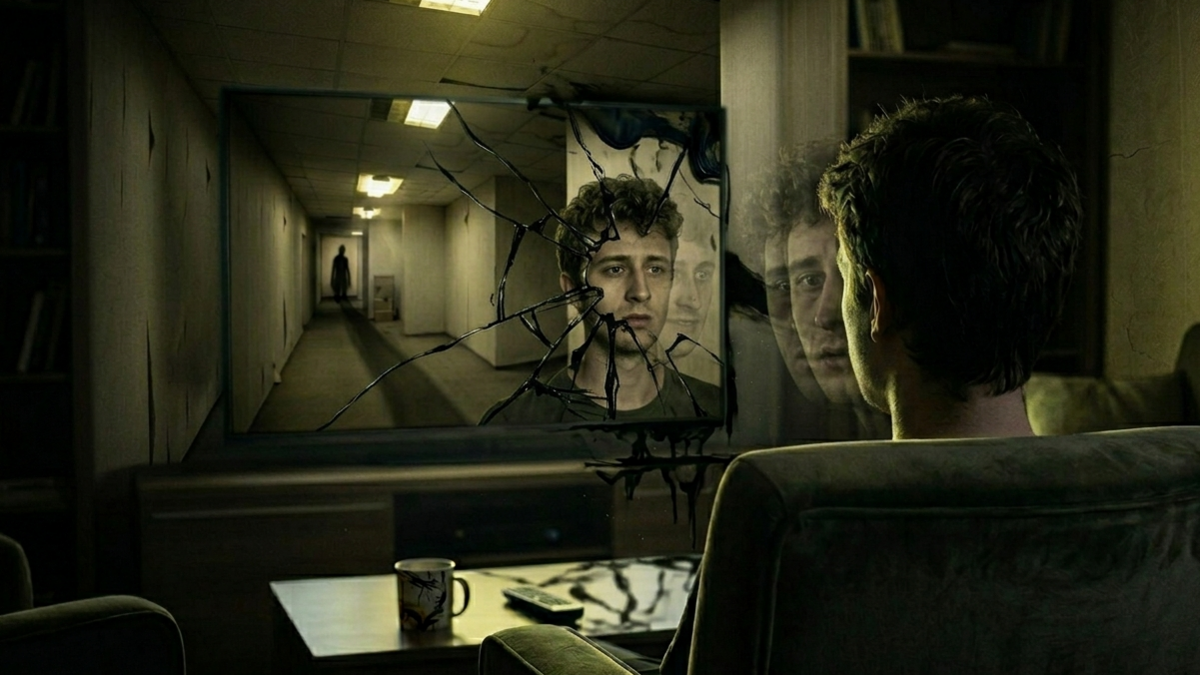
Young horror filmmakers are showing how genre conventions can portray the real fears of contemporary life. In existential horror, the most frightening demons no longer lurk in the darkness of night, but in the hidden corners of our own bewildered everyday lives. What terrifies us most is what we carry inside ourselves.
Horror has always been associated with unclean, otherworldly forces: vampires, specters, ghosts, or the living dead. In its more grounded version, it has meant serial killers committing macabre crimes. In classic genre cinema, screen horror mainly served entertainment and catharsis. Yet, subconsciously, it always reflected the anxieties of a particular age, evolving alongside it.
Aristocratic vampires, such as Count Dracula, spoke to the fear of death, forbidden desire, and the destructive longing for eternal life. Over time, they were replaced by more democratic zombies: mindless crowds of living corpses. Already in George A. Romero’s groundbreaking films, including Night of the Living Dead from 1968, they were interpreted as expressions of social unrest, blind consumerism, and growing inequality.
Frankenstein’s monster, in turn, a modern version of the ancient golem, appeared in many forms. It acted as the embodiment of the consequences of human pride in crossing the boundaries of science.
Monsters from outer space and beings from other dimensions gave shape to fear of the unknown aspect of reality, beyond the reach of human understanding. Curses, spells, and possessions “worked through” fears rooted in religion or morality. Often, as in Lee Cronin’s recent Mummy, they also became metaphors for complicated and toxic family relationships.
All these classic approaches shared one feature: the threat came from outside. The characters confronted forces from beyond the grave, from outer space, or from someone’s unmistakable psychosis. The conflict was easy to recognize. It played out between calm, good, safe life and the shadow waiting to descend upon it.
Existential horror — the kind in which existence itself becomes the primary source of metaphysical terror — had previously tended to exist at the margins of the mainstream. In literature, writers such as Thomas Ligotti and Brian Evenson gave it expression. In film, it appeared on the border between auteur drama and thriller, in the works of Roman Polanski, Stanley Kubrick, and David Lynch.
Today, thanks to films such as Zach Cregger’s Weapons, Curry Barker’s Obsession, and Kane Parsons’s Backrooms: No Escape, this existential variant of horror is making its way ever more clearly into the genre’s mainstream.
In this current, the threat is no longer devils, curses, vampires, or masked psychopaths. Even when these motifs appear, they feel conventional, almost pastiche-like, unlike mainstream franchises that still successfully exploit classic formulas.
In the new horror cinema, the role of evil forces has been taken over by human relationships, prosaic everyday life, and the fundamental problem of coming to terms with one’s own inner world.
In the widely discussed Obsession, viewers encounter a story that structurally belongs more to romantic comedy. However, it appears here in a version where a romantic relationship between young people becomes a nightmare. The film portrays fear of commitment, the consequences of false ideas about relationships, and the paralysis born from intense emotions.
Barker’s film, whose creator had previously co-founded an independent YouTube channel, became one of the most profitable horror films of recent months. After screenings, one could hear comments such as: “I’ll always be single” or “people shouldn’t pair off.”
Michael Shanks’s Together takes up a similar motif — the closest of human relationships — and gives it the form of horror arising from the literal, physical merging of 2 bodies into 1 organism. It is a macabre metaphor for losing oneself in a relationship and for the complete disappearance of one’s own identity.
Zach Cregger’s Weapons, meanwhile, conceals within itself a drama of school violence and children’s lack of systemic safety. The hit Talk to Me! and the Philippou brothers’ latest film, Bring Her Back — made by Australian creators who moved from the internet underground into the first league of directing — are emotionally exhausting struggles with loss, trauma, and grief. These are stories about feelings that turn human life into hell on earth.
Backrooms: No Escape is, on one level, a creative expansion of an internet creepypasta, a phenomenon born on YouTube thanks to Kane Parsons. As a teenager, he began making amateur found-footage films set in the surreal space of “rooms behind the wall of reality.”
Parsons became the youngest director in the history of the cult studio A24. The cinematic version gave this digital concept a deep existential dimension. Empty, endless labyrinths in a yellowish hue, lit by buzzing fluorescent lamps, become a psychic space in Parsons’s film.
The film tells the story of a furniture store owner and his therapist, who discover a portal to a parallel dimension in the basement of the building. Unprocessed traumas, personal problems, and the burden of meeting the economic and social demands of daily life all create a platform of nightmare. As a result, this platform materialises in impenetrable, repetitive corridors. People become prisoners of their own problems, and their greatest challenge becomes the sheer weight of their own existence.
All these films point, on the one hand, to the growing maturity of creators and of the themes addressed in genre cinema, which until recently was often reserved for purely escapist, stress-relieving entertainment. On the other hand, they show where social anxieties have moved. These are no longer fears about an external threat to everyday comfort and safety. That perspective has almost disappeared. Life itself becomes the nightmare, along with its daily challenges and situations that once counted as normal.
Why does contemporary everyday life generate such unease? The answer may lie in the realities in which today’s people in their 20s and 30s came of age. They were shaped by internet loneliness, the pressure of social media algorithms, and permanent economic uncertainty.
When traditional, institutional points of support and authority began to wobble, relationships with other people were supposed to offer the only rescue. Yet they too, as young cinema shows, often bring fear: of rejection, insincerity, or the final loss of one’s own agency.
The empty corridors in Backrooms are more than clever internet scenery. They are a visual record of being lost in a world that demands constant, productive readiness while giving little in return. This horror cinema is not driven by fear of losing a safe life. Instead, it is driven by the fear that life itself has been a trap from the very beginning.
Does contemporary horror express an authentic voice of the younger generation and the fears of contemporary life? Or perhaps only one of its voices, ringing out with particular force against the backdrop of the mental health crisis? If so, then perhaps this fact — rather than the macabre scenes on screen — is what should unsettle us after we leave the cinema. That is why existential horror now feels so close to ordinary life. It no longer needs to invent monsters when everyday existence has learned to speak in their voice.
Read this article in Polish: Koszmar ukryty w codzienności. Kino grozy straszy samym życiem


A graduate of Journalism and Social Communication at the University of Warsaw (UW), specializing in culture, literature, and education. Professionally, they work with words: reading, writing, translating, and editing. Occasionally, they also speak publicly. Personally, they are a family man/woman (head of the family). They have professional experience working in media, public administration, PR, and communication, where their focus included educational and cultural projects. In their free time, they enjoy good literature and loud music (strong sounds).


Zmień tryb na ciemny