Humanism
What Happens When Winning Stops Being Proof of Worth?
11 October 2026






A child can get top marks, write excellent tests, and still never learn to think independently. Professor Ryszard Szubartowski knows this better than most teachers: 126 of his students have become laureates of computer science Olympiads. In conversation with Patrycja Krzeszowska, he says the problem begins when, after a moment of silence, the teacher gives the student the first step, the right clue, or the ready-made answer.
Patrycja Krzeszowska: What should school stop doing so that it does not destroy a child’s curiosity, courage, and ability to think independently?
Prof. Ryszard Szubartowski: Above all, it should stop doing the student’s thinking for them.
If a teacher asks a question and, after a dozen or so seconds, starts prompting, leads the student step by step, and effectively shows them the way to the solution, the student quickly learns that they do not have to search for the answer on their own. They only have to wait.
I try to do it differently. I give them a challenge and time. I wait. I do not hover over them. I let the student try, figure things out, come back, and try again. I do not see an incorrect solution as something bad. A wrong solution is a natural part of arriving at the right result.
The second thing is this: we cannot keep telling a child exactly what to do. If we want to raise an independent person, then at some point we have to let them make decisions. You cannot arrive at independent thinking without allowing yourself to think independently.
Can a student go through school with the best grades and still fail to learn independent thinking?
Of course, unfortunately.
You can learn the teacher and become very good at recognizing their expectations. You can learn the material, write a good test, get a good grade, and then remember little of it a few weeks later. But what is the point of that?
For me, a far more valuable situation is when a student receives a challenge they have not seen before. That is when you begin to see whether they can use what they know. Independent thinking begins where reproducing a familiar pattern ends.
That is why I am interested not only in the result. I look at how the student arrives at the solution. Do they try different paths? Can they notice their own mistake? Can they justify their position? Do they try again after failing? This says much more about a person than the grade they receive for mastering a specific portion of material according to established rules.
Can critical thinking be taught in an institution where there is usually 1 correct answer? What would have to change in an ordinary lesson?
First, a clarification, because people often confuse these concepts. Critical thinking, in its essence, is something different from criticizing or fault-finding. Critical thinking means asking questions, looking for connections and meaning, and searching for other ways.
To answer the question: we need to distinguish 2 things. In mathematics or physics, there often really is 1 correct result. But that does not mean there is only 1 way to get there. And that path is very important.
Instead of immediately showing the solution, we can give students a challenge. One student will begin one way, another differently. Someone will propose a wrong solution. Someone will find a solution the teacher did not expect. That is when real learning begins, because you can ask a classmate: Why do you think that? Where does it come from? Can it be done differently? How will you check whether you are right?
A teacher does not have to be someone who spends 45 minutes handing out ready-made answers. Above all, a teacher should know how to create situations in which the student has to activate their own thinking.
How should a teacher recognize a child’s real talent if it may be hidden behind shyness, boredom, rebellion, or poor grades?
I certainly would not look for talent by force only in poor grades or in the negative attitude described here.
You have to create a situation in which the student has a chance to show something. Give them different tasks, observe what interests them, what they can stay with and work on for longer, and what questions they ask when facing particular challenges.
Sometimes a student who seems average in a regular lesson receives a task that truly interests them, and suddenly we see a completely different person. That spark in the eye can surprise even the most experienced educator. That is why I do not believe in attaching labels too quickly: gifted, average, weak, interested in nothing.
A teacher should instead create many different opportunities for a student’s abilities to emerge. Talent does not always announce itself. Most often, it is “hidden.” Conditions have to be created so that it can be seen.
That is also why a student who is “average” today should not be sentenced to being average for the next 10 years. Ideally, we would create a kind of “continuous recruitment,” constantly searching for talent among young people.
How can we assess a student’s development without reducing learning to tests, grades, and exam preparation?
A grade gives some information, but it is very limited. What interests me far more is whether a student can do something today that they could not do 6 months earlier. That should be the basis for any possible assessment.
Do they take on more difficult challenges? Can they work on them for longer? Do they need less help? Can they use earlier knowledge in a new situation? Can they explain the solution to someone else? We could multiply such examples endlessly.
These are very concrete signs of development. In my work, observing the student over a longer period is also important. A single test can show only a certain moment. Development, however, is a process, and a process requires time and patience. If we really want to assess, we must look not only at how much a student knows, but also at how their way of working and thinking changes over a longer period.
If students are to develop their strengths and work on practical challenges, how can we preserve a shared foundation of knowledge — history, literature, general knowledge?
I am not in favor of learning for the sake of accumulating knowledge. Knowledge is needed when a person can use it to understand a subject, ask a question, or find a solution. We learn as much from a given field as we need to solve a specific challenge. Why more?
This does not mean that students should not read literature, learn history, or acquire general knowledge. On the contrary, let them come into contact with different fields. The difference lies in what they later do with that knowledge.
If a student only memorizes other people’s interpretations and reproduces them on a test, we mainly develop the ability to reproduce memorized knowledge. But if they have to search for information independently, compare sources, form hypotheses, question them, and arrive at their own conclusions, knowledge becomes material for thinking.
So the point is not to know less. The point is that knowledge should not replace thinking.
How can we develop a child’s responsibility without taking it away through constant control, assessment, and correction?
Responsibility cannot be taught solely by talking about responsibility. A student has to be given part of that responsibility in reality. If the teacher constantly controls every step, reminds, corrects, and supervises, the student does not even have the chance to discover the consequences of their own decisions.
Of course, this does not mean leaving the child alone. The teacher must create safe boundaries. But within those boundaries, there should be room for many of the student’s decisions. A young person may plan their work badly. They may choose the wrong path. They may experience a small or larger failure along the way. But that, too, is part of the learning process.
Wise care does not consist in removing every obstacle from a child’s path.
Does the contemporary Polish school give children space to really think?
This problem is much broader than 1 teaching method. Mine or anyone else’s. Thinking requires time. School does not provide it. Full stop.
The origin of the word “school” in ancient Greek refers to a place where a person has a mind free from everyday problems and can calmly devote that time to conversation, discussion, and acquiring new knowledge. Does school look like that today?
When a person is working intensely on a task, they usually do not find the solution in an instant. They put it aside. They go for a walk, do something completely different, and the solution comes later. That is not wasted time. The mind is still working.
Meanwhile, school most often functions according to the rhythm of 45 minutes, bell, next subject, next task, next grade. That is why it is worth creating situations in which students can stay with 1 challenge for longer. We should not expect an immediate answer.
One of the things a young person should learn is how to endure a situation in which they do not yet know the solution. It will appear. But the student must have the space to arrive at that solution independently. This is an extremely important skill beyond school as well.
If grades weaken intrinsic motivation, what should replace them so that the student, parent, and teacher know whether development is taking place?
I am not in favor of the simple claim that it is enough to abolish grades and the problem will disappear. A student needs information about where they are. A parent does too. The teacher must know whether their work is having an effect.
So the question is not only, “What grade did you get?” but, “What can you now do that you could not do before?” A student’s progress can be shown through increasingly difficult tasks, analysis of the way they solved something, conversation, projects, or comparison between their current work and earlier work. It is also very important that the student learn to assess their own work.
Ultimately, we want to reach a situation in which a young person does not need someone standing beside them all their life, telling them whether they did something at the level of a 4 or a 5.

What 3 changes could Polish schools introduce as early as tomorrow?
If I had to name only 3, I would start with very simple things. They do not require a revolution in the system.
First, prompt less. Set a challenge and allow the student to really face it. Do not take the task away after the first failed attempt. Give them time.
Second, allow students to work at different levels and at different speeds. There is no rational reason to assume that 25 different people should spend 45 minutes doing exactly the same task at exactly the same pace. This may seem difficult, especially when entering a new class, but over time the teacher will recognize each student’s needs.
Third, give the student responsibility for their own learning. The teacher should set expectations, organize the working environment, observe, and help when help is needed. But the teacher should not do the student’s intellectual work for them.
Not every student will become an Olympiad laureate, and that should not be the purpose of school.
The purpose should be to take every student as far as possible from the place where they began. We compare the starting point and the point of arrival. These periods can be set in different ways — it may be the beginning and end of the school year, or a period of 1 month or 4 months. 1 person, 1 goal.
And if I had to say in 1 sentence what more than 30 years of work with young people has taught me, I would say this: children can do much more than we often assume, provided that we create the conditions in which they can discover it for themselves.
And just to close this thread: 1 of the larger things that requires change is the examination system. But that is a long, multi-threaded subject for another conversation.
* Prof. Ryszard Szubartowski is the creator of an original educational method thanks to which 126 students have become laureates of computer science Olympiads. His method is based on independent creative work, mentoring among students, and the development of individual talents. He criticizes grading systems and learning under stress and fear. Instead, he focuses on the development of the young person. He is president of the Talent Association, which supports the development of outstanding students. For his many achievements, he has received, among other honors, the Knight’s Cross of the Order of Polonia Restituta, the Gold Cross of Merit, the Medal of the National Education Commission, and the title of Professor of Education. A film about him, titled Master, has also been made.
Read this article in Polish: Prof. Szubartowski: Szkoła za szybko podpowiada. Nauczmy dzieci szukać

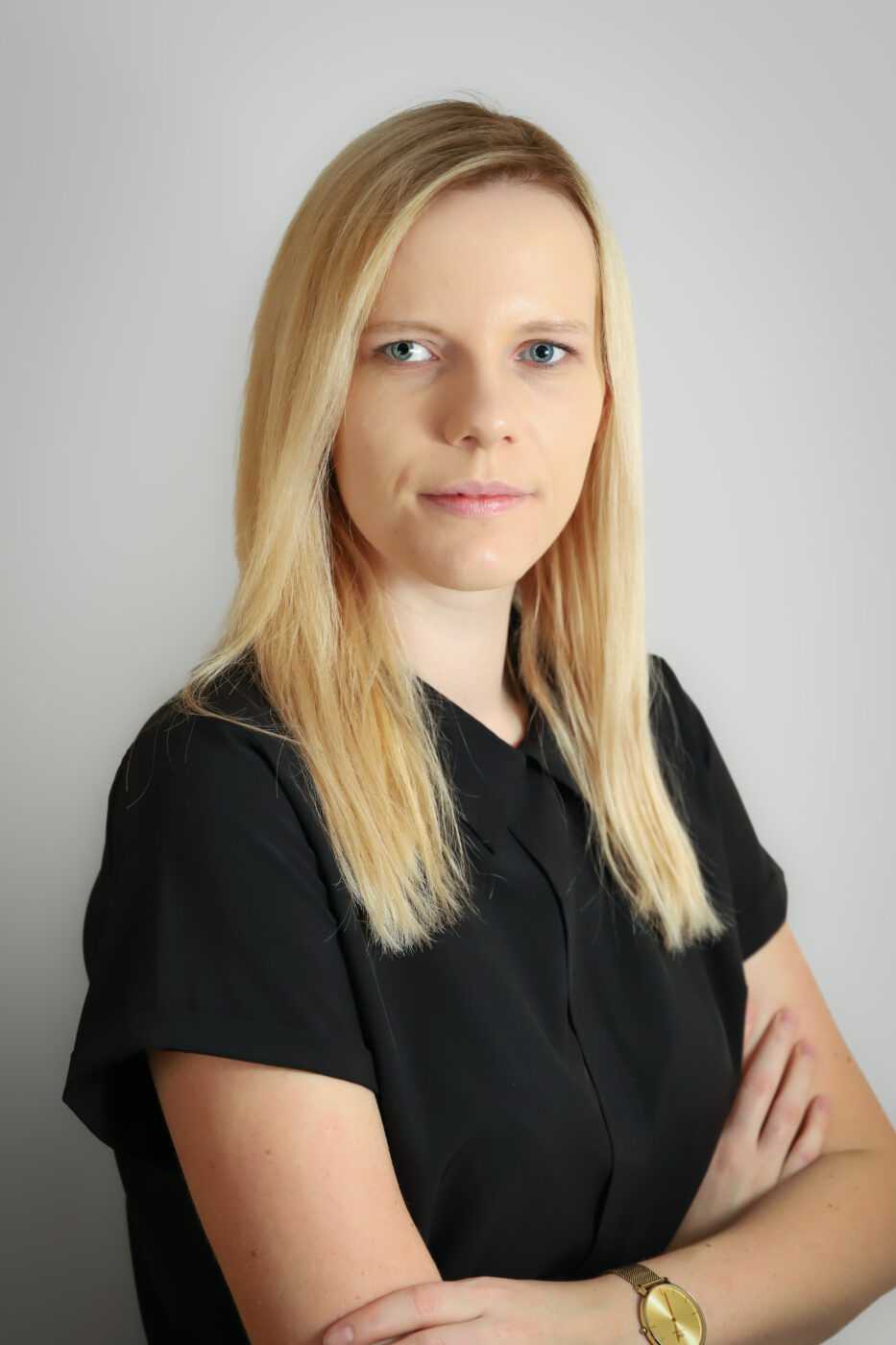
A graduate of journalism and social communication at the University of Rzeszów. She has been working in the media since 2019. She has collaborated with newsrooms and copywriting agencies. She has a strong background in psychology, especially cognitive psychology. She is also interested in social issues. She specializes in scientific discoveries and research that have a direct impact on human life.



Zmień tryb na ciemny