Science
Before There Are Planets, There Is Dust
16 October 2026





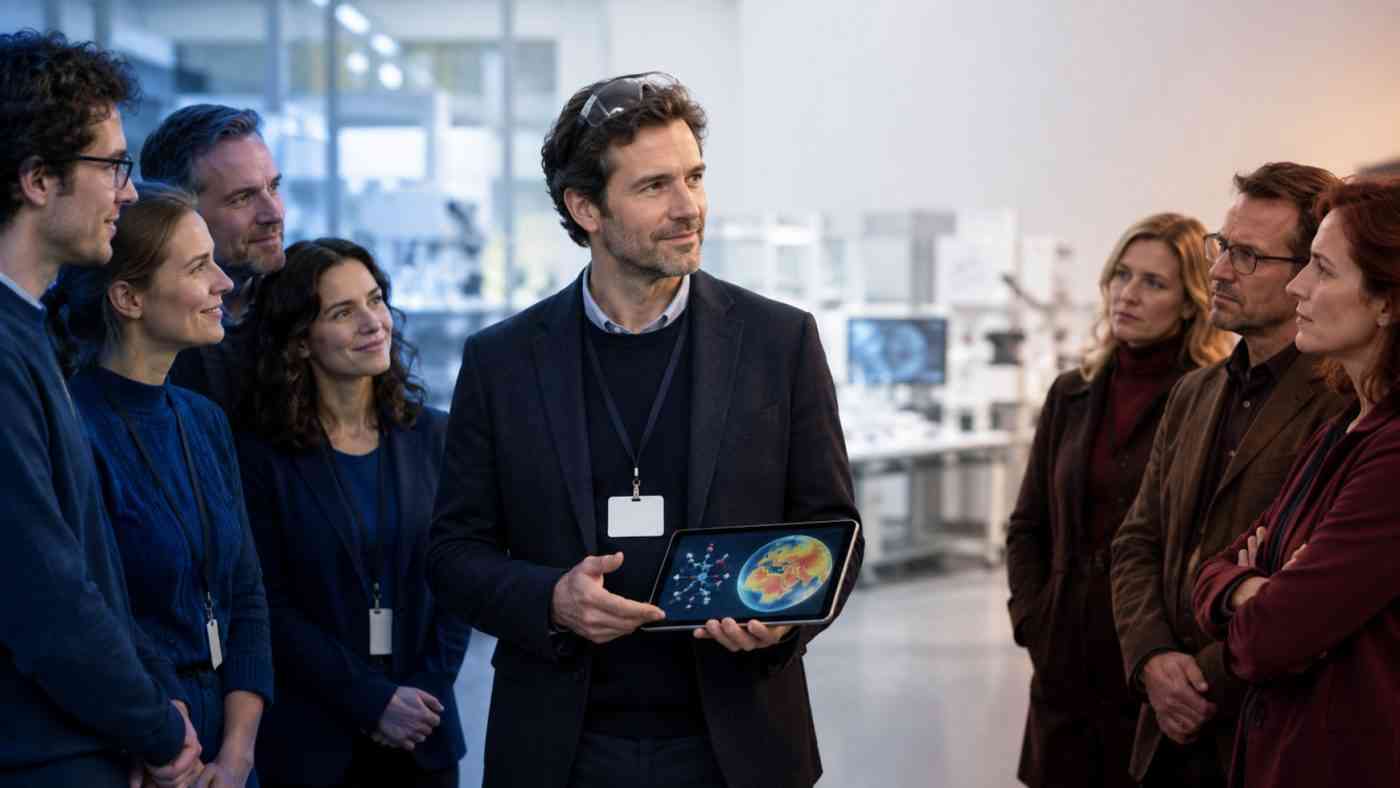
Why do we trust one expert but not another? Trust in scientists depends on more than knowledge, experience, or the quality of the evidence. Research shows that it also matters whether a scientist seems to be “on our side”—someone who understands our values and acts in the interests of people like us.
Scientific findings rarely reach audiences as raw data and charts. More often, they come to us through headlines, expert commentary, social media, and debates over policy decisions informed by research.
That means we assess more than the information itself. We also judge the person presenting it, especially when their findings may have implications for energy prices, vaccination, transportation, education, or new technologies. The same message can strike some people as a credible warning and others as another intervention in an ideological dispute.
A report published in September 2026 by the Policy Institute at King’s College London shows how strongly this mechanism can shape perceptions of experts in the United Kingdom. Although trust in scientists appears high overall—63 percent of respondents rated their trust at seven or above on a scale from zero to ten—it is unevenly distributed.
The findings suggest that trust is associated with respondents’ political views and moral values, as well as their belief that scientists are “on the side of people like them.” Notably, trust was less closely associated with perceptions of scientists’ competence than with the sense that they act in the interests of people like the respondent. That sense mattered even more than a general belief that scientists act for the good of society as a whole.
“In a politically divided society, people increasingly ask: ‘What’s in it for me?’”
—Bobby Duffy, director of the Policy Institute at King’s College London, observes.
This does not mean that experts’ qualifications no longer matter. It does show, however, that someone can recognize a scientist’s expertise while distrusting their intentions or questioning whose interests their knowledge serves. Expertise may therefore be insufficient when people see an expert as belonging to a group whose politics or moral values are far removed from their own.
A study published in 2024 in Public Understanding of Science illustrates this distinction between competence and trustworthiness. The researchers examined how information about a scientist’s concern for others affected perceptions of that scientist. When participants learned that the scientist cared about other people’s well-being, they reported greater trust and rated the scientist’s integrity more highly. Their assessment of the scientist’s competence, however, did not change.
This mechanism becomes particularly apparent when research findings begin to influence policy decisions and everyday life. The debate over climate change and climate policy offers a clear example. In the UK study, 54 percent of respondents reported high trust in climate scientists—a lower proportion than for scientists in general. Differences between political supporters were substantial: 84 percent of supporters of the left-wing Green Party trusted climate scientists, compared with just 19 percent of supporters of the right-wing Reform UK party.
The data alone do not explain why respondents react this way. They do not establish whether the differences arise from scientists’ views, their public image, or audiences’ interpretations. They do show, however, that people may see a climate scientist as more than an expert describing changes in the atmosphere. For some, that scientist also becomes a figure associated with energy prices, restrictions on cars, taxes, or economic regulations.
When research findings become part of a political dispute, people assess more than the findings themselves. Their presumed consequences also matter, along with the intentions of those presenting them. The question of what research tells us becomes entangled with whose interests and what purposes audiences believe it serves.
Science rests on data, methods, and the possibility of verification. Most people, however, cannot independently scrutinize every study, so they also assess those who present the findings. In disputes over issues that affect everyday life, trust in scientists is therefore also a matter of trust in the people and institutions that speak for science.
Read this article in Polish: Ekspert może mieć rację. To za mało, by mu uwierzyć

A Journalism and Social Communication graduate with 15 years of experience in the media industry. He has worked for titles such as "Dziennik Łódzki," "Super Express," and "Eska" radio. In parallel, he has collaborated with advertising agencies and worked as a film translator. A passionate fan of good cinema, fantasy literature, and sports. He credits his physical and mental well-being to his Samoyed, Jaskier.


Zmień tryb na ciemny