Science
A Flicker from Cosmic Dawn, and the Black Hole Mystery It Deepens
09 July 2026






Periods of being alone are a natural part of human existence. If we learn how to live through them well, they can become a source of growth rather than fear. Yet contemporary narratives focus almost exclusively on the demonization of solitude, turning a neutral state into a perceived threat.
The issue of loneliness has become so deeply embedded in public and media discourse that some countries have launched systemic campaigns against it. The United Kingdom and Japan have even created dedicated government posts, often described as “Ministers for Loneliness.” Today, being alone is treated as a “disease of civilisation.” Polish media publish daily warnings suggesting that solitude is profoundly destructive, sometimes even claiming that it kills.
There is exactly as much truth in that as in saying that ‘eating kills’ because it leads to atherosclerosis, heart attacks and obesity. Such simplifications are crude and thoughtless. Solitude itself is not dangerous. What can be harmful is the way we experience it.
– argues psychologist Dr Tomasz Witkowski.
According to the founder of the Polish Skeptics Club, what we are facing is not a “loneliness pandemic” but a plague of monophobia—the chronic fear of being alone. Interestingly, the clinical treatment for monophobia does not consist in surrounding the patient with constant company. It teaches them how to cope with being by themselves.
Meanwhile, government programmes often try to solve the problem mechanically by increasing social contact, for example through more frequent visits from postal workers. Dr Witkowski sees this as a dead end—an attempt to mask symptoms rather than address the real source of distress.
A fundamental problem with the research used to support this supposed epidemic is its lack of rigour. Data collection relies largely on surveys in which respondents report subjective feelings, often in response to leading questions such as: “How often do you feel lonely?” On top of that, most findings are correlational, yet researchers repeatedly try to draw causal conclusions from them.
This simplification is especially visible in the case of Denmark. For years, Danes have ranked among the happiest people in Europe. Paradoxically, Denmark also has one of the highest shares of people—around 30 percent—who describe themselves as lonely.
Media reports also sound the alarm over the growing number of “lonely” older adults, while ignoring the fact that the elderly population itself is increasing proportionally. Once adjusted, the statistics have remained stable for at least a decade: between 5 and 15 percent of older people report feeling lonely. Moreover, loneliness at the age of 80 or 90—for example after the death of a partner—is a natural human experience, not necessarily a social pathology.
Some studies also claim that lonely people die earlier, yet they often fail to account for those who have recently escaped a toxic and emotionally draining relationship. More in-depth analyses show that staying in a failed marriage can be a major cause of many illnesses. In that sense, the absence of solitude may be more harmful than its presence.
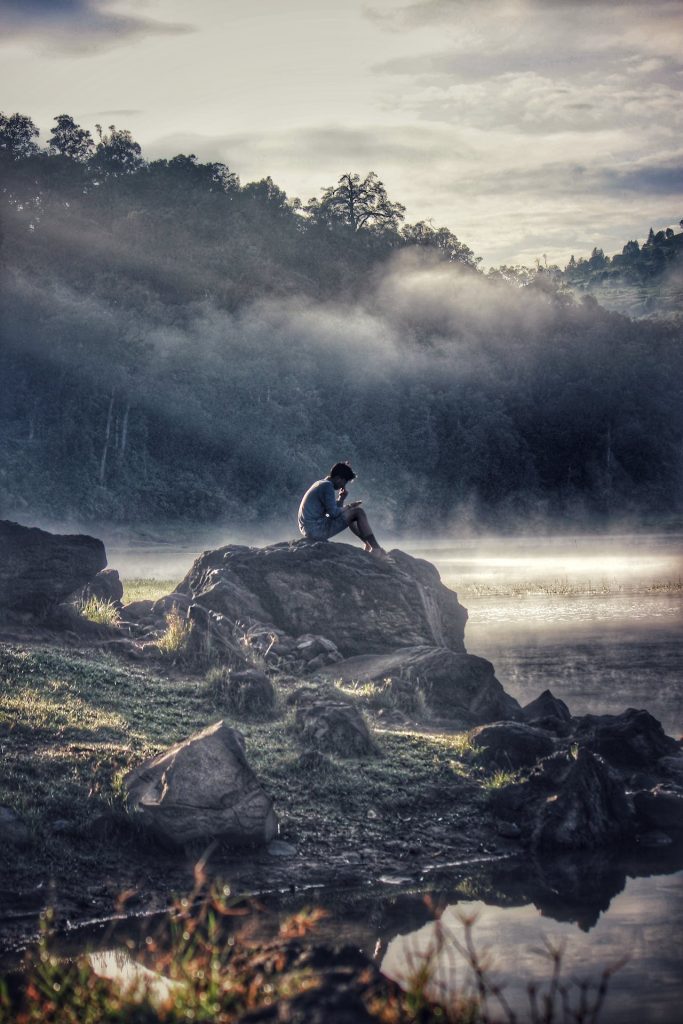
Experimental psychology, by contrast, shows that solitude encourages self-reflection and helps people better understand their own goals. Being alone fosters creativity and spiritual development. Paradoxically, those who consciously choose solitude often form closer and deeper relationships with others and display greater empathy.
If I spend time with myself, I later approach other people with more mindfulness. But if I am constantly surrounded by people who irritate me or cross my boundaries, I do not become more empathetic. On the contrary, my aggression increases.
– Dr Witkowski explains.
This leads to a provocative conclusion: being alone can function almost like a vaccine. We need to remember that human contact does not always bring comfort or fulfilment; other people can also be a source of intense negative emotions. As Jean-Paul Sartre famously wrote, “Hell is other people.” It is no coincidence that solitude is more often chosen by highly intelligent individuals. One shudders to think how many masterpieces would have been lost if philosophers and artists had never voluntarily embraced isolation.
From an evolutionary perspective, being alone 200,000 years ago could mean certain death. Today, however, external conditions have changed. We can be alone without suffering the same consequences. In the West, the number of single-person households is rising—a direct result of prosperity and personal choice.
Our relationship with aloneness is perfectly illustrated by Arthur Schopenhauer’s “porcupine dilemma”:
“On a cold winter’s day, a group of porcupines huddled together to keep from freezing. But they soon felt the pain of one another’s quills, which drove them apart. When the need for warmth brought them together again, the same problem returned. In the end, they discovered the right distance at which they could tolerate one another.”
Human beings are exactly the same. We want closeness, but we also want the comfort of being alone. We prefer to live separately and meet up on occasion rather than have family constantly ‘on our heads’. We are always searching for that optimal distance.
– the psychologist comments.
Dr Witkowski suggests that modern culture imposes a constant need for socialisation because it serves the capitalist-consumerist machine. Christmas films almost invariably portray solitary people as deeply unhappy, modelling behaviours that stimulate consumption. Research shows that we eat more in the company of others. When we are with people, we want to impress them, which pushes us to buy clothes, gifts and status symbols. But when we sit at home reflecting on Marcus Aurelius, many of those consumer desires simply disappear.
This engineered monophobia is particularly dangerous for younger generations. More than half of Generation Z—those born between 1995 and 2012—report feelings of loneliness. But the real question is whether this stems from a lack of people or from low self-esteem and a lack of basic social skills. Perhaps the answer is not forced socialisation, but an end to the demonization of solitude, so that younger people can learn to find peace within themselves.
Read this article in Polish: Samotność nie musi być przekleństwem. Za to jej demonizowanie może być szkodliwe


A social journalist and a freelancer. A published author. Her works have appeared in a number of Polish magazines such as “Polityka”, “Tygodnik Powszechny”, “Dwutygodnik”, and “SENS”. She critically explores phenomena of contemporary culture with a poetic soul and an inquisitive mind. Her life companion: a chocolate-colored husky named Fąfel.


Zmień tryb na ciemny