Education
What Does It Take to Keep a Child Curious?
28 September 2026





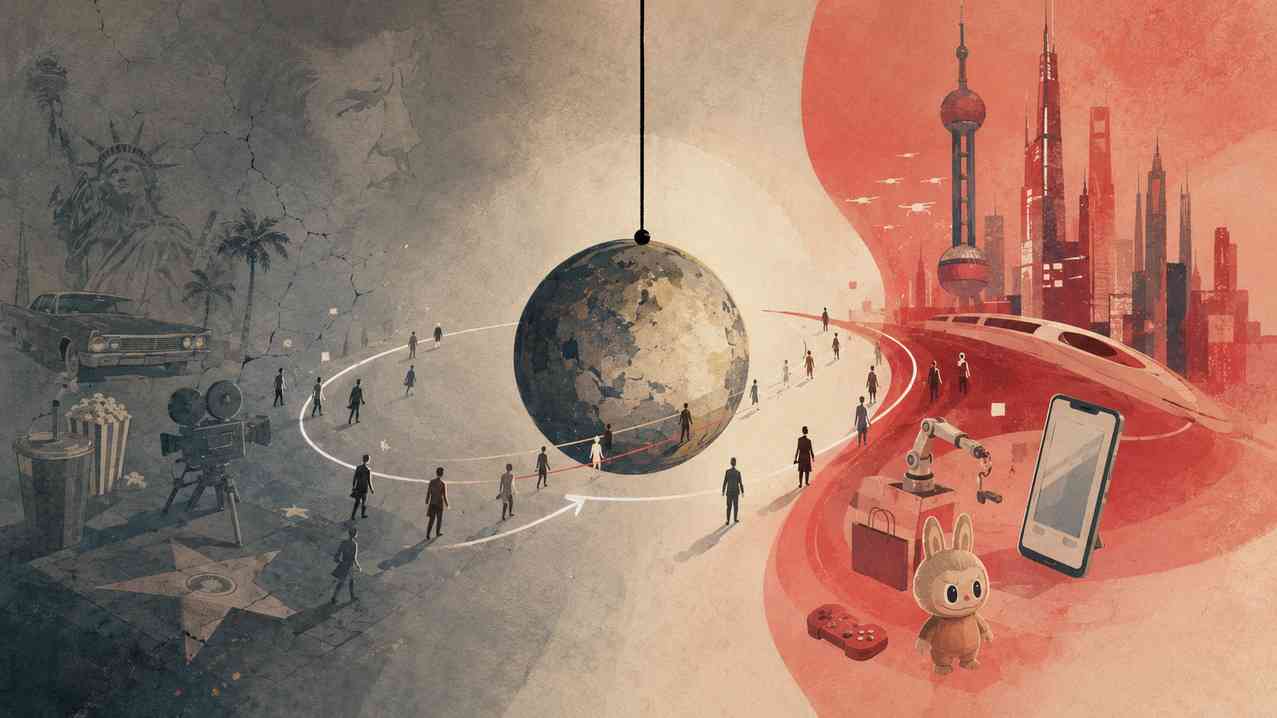
For decades, the world looked at the United States as a catalog of success: freedom, modernity, Hollywood glamour. Today, that catalog has begun to yellow. Chinese soft power now sells its own story of the future more effectively, from high-speed rail and TikTok to Labubu. The soft war for global influence has entered a new phase.
American specialists in “soft power” must have felt stunned, because researchers had never recorded results like these before. In mid-July, Pew Research published survey results showing that, among 36 major countries, America for the first time in the 20-year history of the study has lost to China in terms of image.
In 25 of the 36 countries surveyed, respondents view the Middle Kingdom more favorably than Uncle Sam’s homeland. On average, 46 percent of respondents now express a positive view of China, while only 36 percent express a positive view of the United States. Last year, these curves had already come very close to crossing. Yet in 2023, the data looked entirely different: 58 percent for the United States and only 32 percent for China.
The survey covered major countries from different regions of the world, including Pakistan, Mexico, Poland, Germany, India, Nigeria, and Japan. Poland also shows a shift in how people perceive both powers, though Poles still rate the United States more favorably than China. In Poland, 49 percent view the United States positively, while 39 percent view China positively.
In the Global Soft Power Index 2026, the United States still ranks 1st, although it recorded the largest decline among 193 national brands. China ranks 2nd and, for the first time, has overtaken the United States in the reputation category.
These results show, to some extent, how much effort China has put into extending its soft power, including through cultural influence and economic influence in Africa, the Americas, and other parts of the world,
– The New York Times wrote in its assessment of the survey results.
China’s growing skill in using soft power matters, but the main cause lies in America itself, and more precisely in the White House. This highly significant polling shift, which shows the decline of American soft power — the ability to influence others without resorting to the “hard” arguments of coercion — stems above all from Donald Trump’s ruthless politics.
Nowhere can we see this better than in America’s immediate neighborhood. The Pew Research survey shows that not only Mexicans, who for historical reasons usually approach America with some skepticism, but also Canadians now view China more favorably than the United States. Canada shows especially clearly how the erosion of American soft power translates into hard politics.
In last year’s elections in Canada, the Liberals, who had governed for years, seemed headed for a spectacular defeat and looked likely to hand power to the Conservatives. Then Donald Trump entered the fray, claiming, among other things, that Canada should join the United States as another state.
These rather unflattering opinions about Canada’s value as a state not only angered Canadians in the most ordinary sense, but also shaped their mood at the ballot box. How? By backing the Liberals, who promised resistance to Trump’s America, rather than the Conservatives, who would inevitably have made better partners for Trump.
The behavior of a state leader, who powerfully shapes how the world sees his country — one of the most important elements in building soft power — created a problem for Washington. Canadian Prime Minister Mark Carney has already shown many times that the White House will have trouble with him. All Washington had to do was care for its soft power, which attracts others instead of pushing them away.
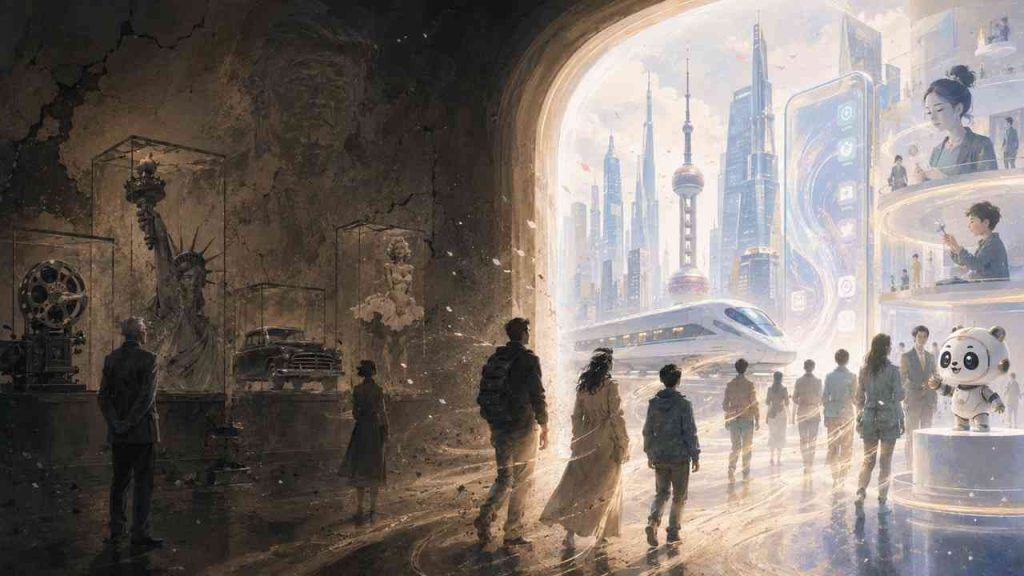
The term first entered public debate in 1991 thanks to Professor Joseph Nye, a Harvard University political scientist who worked not only as a theorist, but also as a practitioner in successive American administrations. At the end of the Cold War, he introduced the distinction between “hard power” and “soft power.” Nye argued that America should influence the world above all through “soft” means, such as its culture, business, and political model, so that other states and societies would feel more inclined to join actions that served American interests.
Let us give the floor to Nye, who explained the concept in his famous text Public Diplomacy and Soft Power: “Soft power is the ability to influence others in order to achieve desired outcomes through attractiveness, rather than coercion or payment. A country’s soft power rests on its cultural resources, values, and policies. A smart power strategy combines hard and soft power resources. Public diplomacy has a long history as a means of promoting soft power and played a key role in victory in the Cold War.”
The theory of soft power therefore rests on 3 pillars: attractive culture, universal political values, including care for civil liberties, and a balanced foreign policy that reaches for the argument of force only as a last resort.
Nye strongly favored “soft” influence, and America did indeed triumph in culture and business during the 2 decades after the end of the Cold War, something Poles remember perfectly well. Poland offered an extreme example of American soft power’s success. In the 1990s, almost the whole country “fell in love” with the United States.
In Poland, McDonald’s became a synonym for delicious and exclusive food. American films dominated our video rental stores. Cars “Made in U.S.A.” evoked the height of luxury. The American flag symbolized the freedom that Poles had longed for through almost 5 decades of communist rule.
Other countries showed similar reactions. America, the winner of the Cold War, enjoyed glowing coverage. Poorer countries gorged themselves on its culture, and Uncle Sam’s soldiers did not have to intervene for American influence to spread across almost the entire globe.
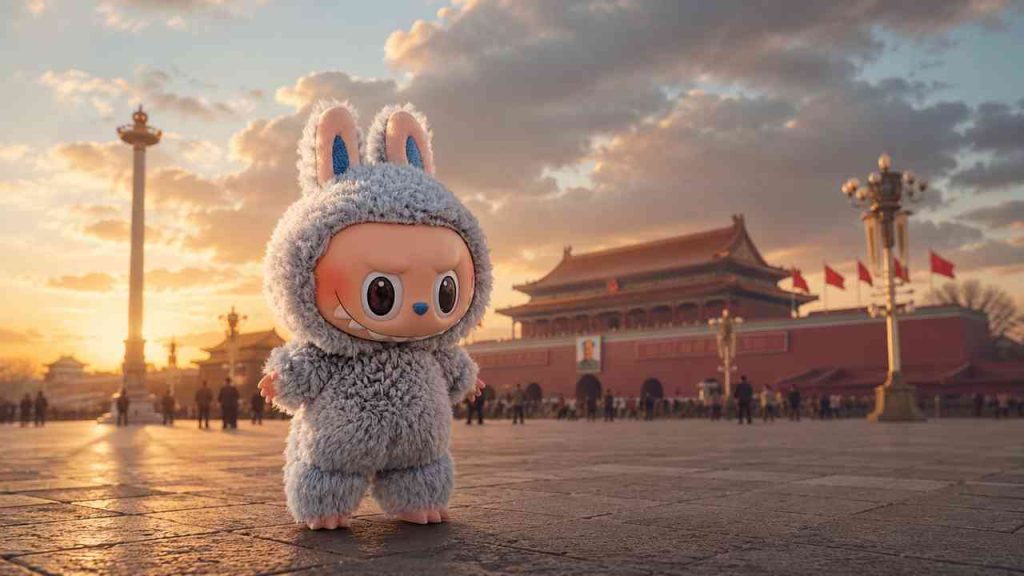
Does soft power still offer an attractive alternative in a world after the end of American hegemony, a world to which naked hard force has returned, as we can see clearly in Ukraine? China’s example shows that states still treat this element as a very important supplement to “hard” methods of influence.
America’s great rival signaled as early as 20 years ago that it would develop its soft power. In 2007, Hu Jintao, then leader of the People’s Republic of China, announced at the 17th Congress of the Chinese Communist Party that the Middle Kingdom would invest more resources in “soft” tools for influencing the world. As part of this strategy, Beijing poured billions of dollars into Chinese media with global reach.
In this way, 10 years ago, the powerful China Global Television Network, or CGTN, came into being, broadcasting in 5 global languages: English, Spanish, Arabic, French, and Russian. At the same time, the network of Confucius Institutes grew rapidly. Beijing sponsors these institutions to promote Chinese culture abroad, mainly through Chinese-language teaching. Such institutes have also opened in Poland.
In China’s case, however, this task proved difficult, because the country hardly evokes freedom, and its political model looked pale beside everything the Statue of Liberty represents.
The situation changed as China’s economy developed. Highly modern Chinese metropolises, connected by high-speed rail, impressed the world. At the same time, American cities struggled with increasingly deep social problems, most visibly in the crowds of homeless people addicted to fentanyl.
Add to this America’s deep political divisions, huge demonstrations on both sides that signal a crisis of the state, and stories about the hard lives of “ordinary” Americans who lose jobs in plants moved to Asia. Especially in the so-called Global South, the clash between 2 realities — China accelerating and America losing breath — pushes questions of politics and freedom into the background. This becomes even clearer when the US president repeatedly shows that, for him, only naked force matters, a force that lets him push others around.
The Chinese build their soft power mainly on economic success. Their “power of attraction” rests on the potential of Chinese development investments, which Beijing carries out, among other channels, through the Belt and Road Initiative. People in poorer countries in Africa, Asia, and South America can still watch Hollywood hits in which the United States looks highly attractive. But when they look out the window, they see highways, power plants, and factories built by the Chinese, who tell them: “Do business with us and grow rich, and we — unlike the West — will not impose foreign values on you.”
China also tries to influence the world culturally. The blockbuster The Great Wall, starring Matt Damon, offered an early sign of this trend. Chinese backers stood behind the production and made sure the film showed their country in the best possible light: as a powerful civilization defending the rest of the world from a great threat.
Recently, The New York Times drew attention to an interesting phenomenon: so-called Labubu diplomacy. The plush toy with a controversial look has conquered the world, which to some extent may recall the expansion of the Barbie doll, itself an excellent element of American soft power. Labubu, which brings a real fortune to its Chinese owners, naturally wins praise from the authorities.
The fluffy, 9-toothed elf created by the Chinese toy maker Pop Mart has become a flagship example of how Chinese pop culture spreads across the world,
– People’s Daily, the Chinese state newspaper also published in English, wrote last year.
If we browse social media, especially TikTok, we can see how widespread so-called Chinamaxxing has become: admiration for the Chinese way of life, including the ritual of drinking green tea. This phenomenon grows more visible all the time. Crowds of Western influencers also travel to China and discover how extraordinarily developed Chinese infrastructure has become, and how modern the country now looks.
The visit of the highly popular American influencer IShowSpeed offers one example. He could not stop marveling at Chinese high-speed trains, which reach speeds above 300 kilometers per hour and make it possible to travel the Middle Kingdom from end to end. The United States has not built a single kilometer of such routes.
Americans are already giving way to China in economic matters. And economic strength remains one of the key components of state power. If Washington also suffers defeat in the field of soft power, it will find itself in real trouble.
For now, Chinese soft power no longer looks like a slogan or a distant ambition. It increasingly works through infrastructure people can see, platforms they use every day, and cultural symbols they carry in their hands. From Hollywood to Labubu, the struggle over global influence has moved from aircraft carriers and trade figures into the realm of desire, imitation, and the stories nations tell about the future.
Read this article in Polish: Od Hollywood do Labubu. Miękka wojna o globalne wpływy


Journalist with a degree in American studies, writing mainly about foreign policy and history. Author of numerous reports on international issues and interviews with leading experts in the field of economy, geopolitics and history. Since March 2023, editor-in-chief of the monthly "Historia Do Rzeczy".


Zmień tryb na ciemny