Culture
The Reports Were Written by Friends
10 October 2026





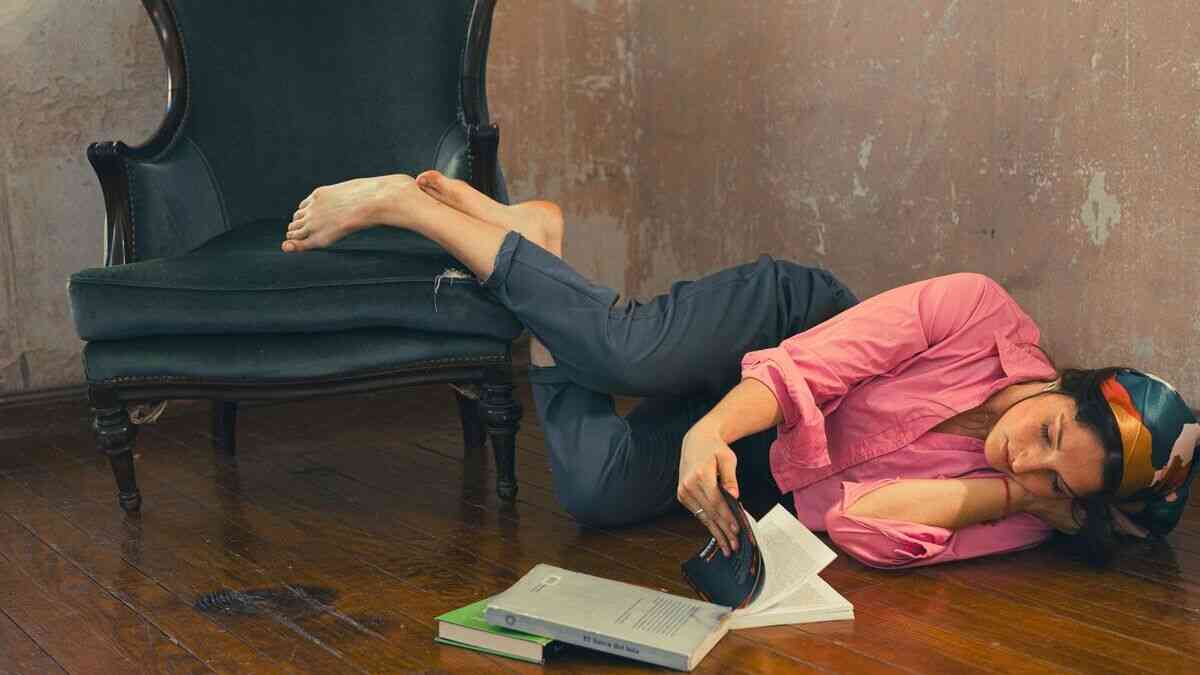
The world is rushing ahead, and one change chases the next. How do we cope in a world of chaos? The books that help us understand what is happening are not self-help manuals. They are books for hard times: timeless works worth keeping on the shelf and reaching for like medicine. When needed.
Bookshops may be flooded with masses of “how to live” self-help books, but we all know from experience that their effect resembles taking a drug. For a while after reading one, you feel better. You seem full of energy, and with the zeal of a convert you want to change the world. But after a few weeks, everything returns to normal. Once again, you understand nothing of what is happening, and your mood collapses.
The only person truly doing well is the author of the self-help book. He or she makes a pile of money by offering the market something it has been sucking up for years like a frog swallowing a fly. After all, we are all standing on the edge of despair, though most of us are trying to free ourselves from that feeling. Often, we look for guidance from various “teachers of life.” We discover that the advice of such a teacher works like Buddhist Dharma candy — only at first, and only within limits — after we have already spent a few dozen złotys. Then we feel foolish for having fallen for it again in a moment of weakness.
The books I have chosen for you do not flatter the reader by promising a land flowing with milk and honey. What they offer instead is the kind of kick every well-read, knowledgeable person dreams of. And yet the reader still feels pleasantly surprised, because they have just read a work that makes them want to want — and not want not to want.
Assuming that each of us goes through smaller or larger crises, we need, from time to time, reading that soothes and cleanses. We do not want horror, crime novels, or ghost stories. We want something light and meaningful at the same time. Jon Frederickson’s The Lies We Tell Ourselves fits that need perfectly.
Frederickson is a therapist with 25 years of experience. Painfully marked by life after the loss of his brother, he spent a long time struggling with psychological suffering. One day, he realized that pain is a fact, but suffering can end. To heal, Frederickson argues, we need to know precisely the pathogenic lies we live by. Only then can we accept the healing truth. Most of us, however, flee from truth in every possible way, using sophisticated methods to avoid, muffle, and falsify it.
We suffer because we flee from life and from death, rejecting the lesson they offer. We heal when we begin to accept ourselves, other people, and our life. At the same time, we must remember that the human being is a mystery that can never be fully known. After reading this book, you may feel: “Yes, of course. I sensed it was like that.” And that feeling will be entirely justified. This is a book about what we know, but have somehow forgotten, or have been afraid to admit. A deeply cleansing experience.
Another book worth keeping at home for years is Necessary Losses by Judith Viorst, the American writer and poet. The book remained on The New York Times bestseller list for 2 years. It is not hard to see why. With extraordinary wisdom, compassion, and wit, Viorst analyzes the stages of our life, including the painful loss of closeness with those who seem destined to accompany us to the end.
Over the course of life, we lose love, illusions, dependencies, and impossible expectations. Each of us must give them up in order to grow. This sounds pessimistic only on the surface. When we realize that there are no ideal relationships, no ideal situations, and that our power and possibilities are limited — that we must yield before what is forbidden or impossible to fulfill — we become a few pounds lighter. In the heart.
Loss shapes our life, and the awareness that nothing is given to us once and for all can become the beginning of wise and hope-giving change. Judith Viorst explains with great sensitivity that everything has its end, and that learning to cope with losses can strengthen us emotionally and psychologically.
Reguły na czas chaosu and Ucieczka od bezradności — two books by Tomasz Stawiszyński, Poland’s philosopher-on-duty — are essential reading for those who value calm, critical thinking, and inner stability in an uncertain world.
Step by step, and with extraordinary erudition, Stawiszyński shows how important it is to keep a distance from a hysterical world and from market pressures that force us to live in a state of constant excitement. He explains why it matters to accept our own helplessness, which forms part of the human condition. Paradoxically, accepting what we do not want may bring us more of what we desire and need.
These are very important books by Stawiszyński. They have the power to shape younger generations and strengthen all those mature people who already carry enormous responsibility for others.
For readers who value essays, I also recommend The Tyranny of Choice by the Slovak sociologist and philosopher Renata Salecl. It is a brilliant book about the fact that we are not, in truth, the blacksmiths of our own fate — though that does not release us from the duty to strike while the iron is hot.
Salecl asks how the idea of choosing who we want to be, and the compulsion to “become ourselves,” turned against us. This is a deeply perceptive essay about the fact that wise advice does not necessarily make us happy. But discovering the hidden logic of our contradictory everyday behavior may bring us closer to the kind of existence we would like to experience.
And finally, a novel with the power to change a life in times of storms, pressure, and chaos. David Grossman’s A Horse Walks into a Bar is a display of masterful literary technique.
Grossman, an opponent of war, lost his 20-year-old son Uri during the 2006 Israel-Lebanon war. For several years, he searched for a way to cope with that traumatic event. Then he invented a comedian who stands on stage, torn between his obligation to the audience and his debt to himself.
Dovaleh Greenstein, the main character, exposes the wound he has carried for years. That has consequences. Guilt demands atonement. The reader, meanwhile, experiences a kind of catharsis. Each of us lives with some wound. And each of us dreams of freedom from suffering.
There will be no miracles. Only the clean awareness that life is a gift. Whatever happens, keep calm. And switch on your critical thinking. That may be what books for hard times can still teach us.
Read this article in Polish: Nie zawsze potrzeba porad. Czasem pomaga dobra książka

A journalist, writer, playwright, painter, and therapist working towards certification. The author of 9 books, including Jak odzyskać duszę, Gdy nadwrażliwość wystawia rachunki. Czterdzieści dwa listy o miłości, życiu i śmierci, co-written with philosopher Professor Lech Witkowski, and Miłość w Ejlacie, published by PIW. A graduate in Political Science from Nicolaus Copernicus University in Toruń, she also completed the European Journalism Programme at the Natolin European Centre and the Academy of Transpersonal Therapy in Warsaw. Her work has appeared in Twórczość, Odra, Czas Literatury, Helikopter, and Dialog.
Zmień tryb na ciemny