Education
What Children Learn When They Count on an Abacus
25 September 2026





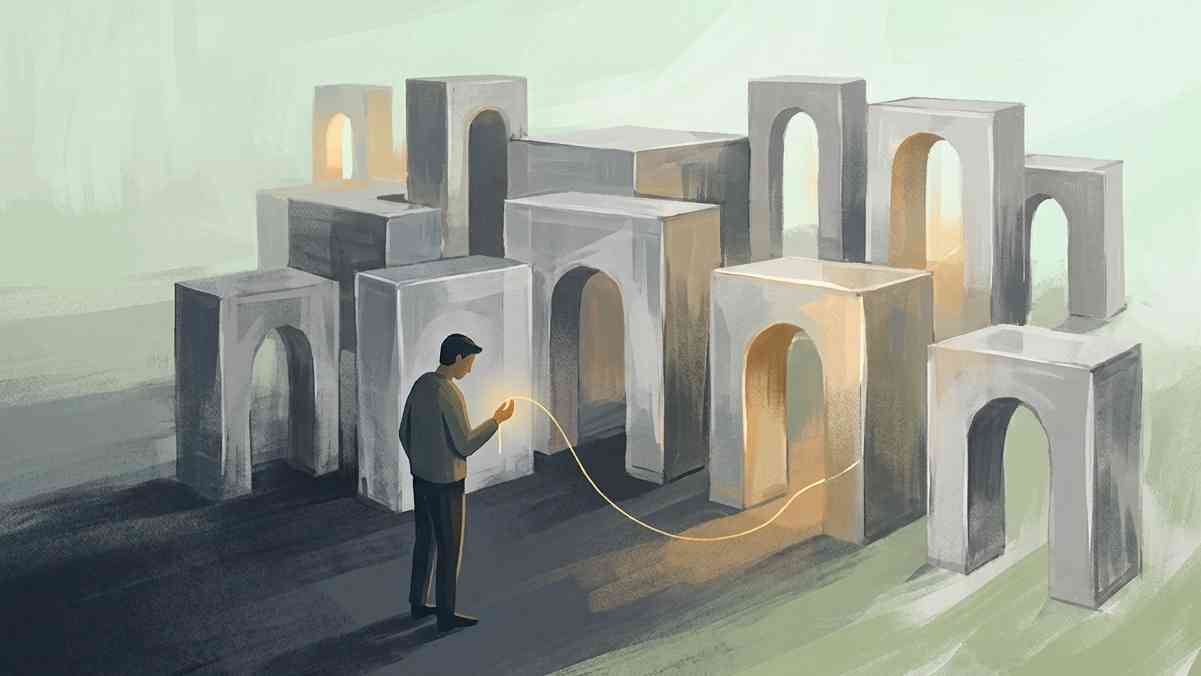
Why, when we have so much choice in the modern world, do we lose our way, feel helpless and often fail to choose what is best for us? Too many options can leave us paralysed and uncertain instead of making us feel freer.
Almost everything is now within reach. You can reinvent yourself without leaving home. Online shopping, dating sites, and glimpses of other people’s lives on social media and television can distance us from a sense of what we truly need and what contemporary culture tells us to want. Our options seem almost limitless, which can feel like complete freedom. In reality, the sheer number of consumer decisions can leave us overwhelmed.
What happens to us in these situations?
American psychologist Barry Schwartz, whose work includes the psychology of economics, explored this question. His theory of the paradox of choice shows that more options on the market do not always improve consumers’ wellbeing. An excess of purchasing options can lead to decision paralysis and dissatisfaction. More choice does not necessarily mean greater control or better decisions.
The same may be true of romantic relationships. With so many apparent options—and ever more beautiful people on Instagram and reality television—we keep hoping that we will meet someone better than the person beside us now.
Israeli sociologist Eva Illouz describes this phenomenon in Why Love Hurts. She gives the example of a 54-year-old man who leaves a 38-year-old woman because she wants to have a child:
Eugene cannot make a decision despite having spent a long time examining himself. The process has paralysed his will even as it has sharpened his ability to assess the situation rationally. The words of the poet Theodore Roethke come to mind: “Self-contemplation is a curse / That makes an old confusion worse.” Eugene is waiting for the truth about his emotions to reveal itself, but rational introspection cannot bring him that revelation. The self is not a fixed, unchanging entity that we can know, with clear boundaries and definite contents. The social self is, in fact, pragmatic in nature: it is continually shaped by circumstances and by other people’s actions. When we look inward, we try to discover needs or desires that do not change, although they take shape in particular situations. Decisions guided by intuition come more easily. They call on our emotions and on knowledge accumulated unconsciously over time; they also require a willingness to take risks. Deliberating over and comparing different possibilities, by contrast, means breaking the object, person or situation under consideration into its component parts. This weakens our capacity for deep emotional commitment. Giving reasons and dissecting what we are considering diminishes the emotional force of our decisions, leaving us to wonder whether we are capable of commitment at all.
Things were different in the 19th century, for example. A person could assess their own worth, drawing self-respect less from other people’s approval than from measuring themselves against moral standards. People sought to improve themselves to meet those standards and the hopes others placed in them. Today, the fear hanging over any romantic relationship is that it will fail to give both people a sense of being valued. Love now involves continually affirming a person’s individuality and worth. In the past, loyalty and commitment were evidence of love.
Why has this changed? Because we live in an era in which social worth is uncertain and continually negotiated, Illouz argues.
Illouz observes that contemporary culture’s focus on “self-esteem” reinforces insecurity. People seek recognition and try to find something to hold on to, while technology increasingly shapes their imagination. It generates new desires, longings and emotions, as well as new ways of experiencing them. According to Illouz, this gives rise to new ways of interpreting experience that tell people how to understand and feel their emotions and desires.
Meanwhile, the number of available choices keeps growing.
In The Tyranny of Choice, Slovenian philosopher and sociologist Renata Salecl examines the traps that await us among online dates, new gadgets, feng shui furnishings and the latest diets. She asks how the idea that we can choose who we want to be—and the imperative to “become ourselves”—came to work against us. Instead of enjoying greater freedom, we have become more anxious and helpless.
Consider casual dating, where choice takes centre stage. We have so many options in every part of life that emotional attachment can seem like more than another burden. It can feel like an obstacle to complete freedom, which we are told should be our highest value.
Many young people now think: if I become attached too soon, I will not make the most of my freedom. Somewhere out there, there must be someone better than the person pursuing me now. And after that, someone better still might appear. The search could go on forever.
Salecl explains that casual dating was intended to offer women greater freedom, including the freedom to adopt behaviours previously associated mainly with men. It allows for relationships without promises or expectations and for brief encounters without a later emotional commitment.
At the same time, the author of The Tyranny of Choice points to a paradox. An emphasis on choice and control does not necessarily bring a greater sense of freedom. In her view, a culture of casual relationships can intensify uncertainty, doubt, anxiety and guilt rather than remove them:
The culture of casual dating would, then, allow women to establish new rules for romantic relationships. At last, they are free to behave in ways that until recently were largely reserved for men. They can pick someone up for one night and then act as though nothing happened. They make no promises and have no expectations. Because they do not want to be hurt repeatedly, they try not to invest too much emotion in such encounters. The paradox is that, despite its emphasis on choice and control, the culture of casual dating feeds on uncertainty. It was supposedly devised to free young people from attachment, but in reality it increases doubt, anxiety and guilt.
—writes Renata Salecl.
We are taught that rational choices help us stay in control, making life predictable and reducing risk. In reality, choosing often takes away our ability to predict the future. It brings regret for what might have been and hope for what might still come.
It may be better to accept that life also happens to us. To make the most of it, though, we need to know what is best for us and what others are trying to sell us for their own profit. How can we resist the tyranny of choice? When an idea, trend or way of behaving is particularly glorified in a given society, we should be cautious. Under communism, this applied to workers’ rights and the ideals of a class-based society. Under late capitalism, it applies to the idea of choice.
Choosing is not simple, and it is often not rational either. We can begin by understanding our options and what we truly need. To find out, we need to get closer to ourselves. We must pay careful attention to our own needs and wounds rather than imitate personalities created for the internet or television. Then it will be much harder to persuade us to pursue someone else’s goals. And we will more often find happiness in our own capacity to act. That is one way to loosen the grip of the paradox of choice.
Read this article in Polish: Nieskończony wybór to pułapka. Nie wpadną w nią ludzie uważni

A journalist, writer, playwright, painter, and therapist working towards certification. The author of 9 books, including Jak odzyskać duszę, Gdy nadwrażliwość wystawia rachunki. Czterdzieści dwa listy o miłości, życiu i śmierci, co-written with philosopher Professor Lech Witkowski, and Miłość w Ejlacie, published by PIW. A graduate in Political Science from Nicolaus Copernicus University in Toruń, she also completed the European Journalism Programme at the Natolin European Centre and the Academy of Transpersonal Therapy in Warsaw. Her work has appeared in Twórczość, Odra, Czas Literatury, Helikopter, and Dialog.


Zmień tryb na ciemny