Education
What Children Learn When They Count on an Abacus
25 September 2026





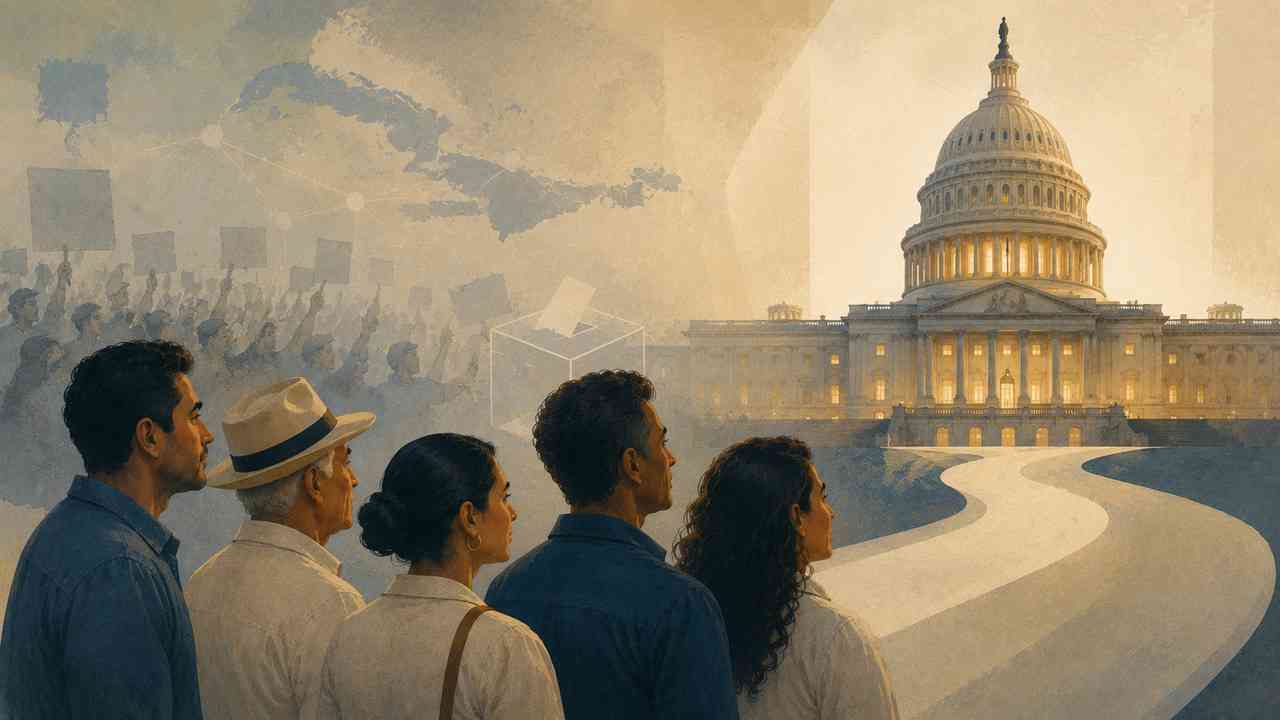
The political strength of diasporas rarely comes from numbers alone. Concentration in key districts, high turnout, efficient organizations, campaign funding, and the ability to unite voters around a single demand often matter more.
Never before have they been so close to the president’s ear. For the past year and a half, one of their own has helped shape the main outlines of US foreign policy, and it seems that little now separates them from a goal they have dreamed of for more than 60 years. That is why Cubans living in the United States, and their direct descendants who still feel tied to that beautiful Caribbean island, look with such hope at the efforts of Marco Rubio, the US Secretary of State, who also serves as National Security Adviser.
He stands behind the new policy of “maximum pressure” on the regime in Havana, a policy that the Cuban diaspora in the United States broadly supports. Rubio’s policy is the “fruit” of many decades of efforts by Cuban immigrants in the US, who tried in many different ways to influence Washington on this issue.
The campaign of ‘maximum pressure’ led by the US Secretary of State is the culmination of his personal crusade, one that has lasted for decades,
– The Guardian recently wrote in an article on the role of this son of Cuban immigrants in tightening the Trump administration’s sanctions noose around the Castro regime.
An anonymous acquaintance of Rubio from his years in local politics in southern Florida, quoted by the British daily, emphasized that for the US Secretary of State, “all roads led toward Cuba.”
More than 2 million immigrants from Cuba live in the United States. They arrived in America in larger and smaller waves from the late 1950s onward. The vast majority live in a state whose climate and nature almost mirror their former homeland. After all, only 150 km separate Cuba from Florida.
Cuban Americans form a highly disciplined electorate. In percentage terms, their turnout is about one-third higher than that of, for example, voters of Mexican origin. Their concentration in Florida, one of the key swing states, with as many as 30 electoral votes, gives them a disproportionately large influence on US politics in relation to the size of their population.
This becomes especially visible when Republicans govern, since a large share of Cuban Americans traditionally vote Republican. In 2024, 70 percent of these voters in the Miami area supported Trump. Trump repeatedly promised voters of Cuban origin that no one else would take an equally firm stance toward the Castro regime and that a vote for him would bring the removal of the communist dictatorship closer. Without this concentration in one key state, Cubans would not exert such strong influence over Washington’s policy. Their interests would dissolve in the “sea” of American voters.
Zoe Hovde of Illinois Wesleyan University writes in her study that the Cuban diaspora in the United States has managed to create a political machine capable of setting priorities in US foreign policy.
The older community, which emigrated during the [Fidel] Castro regime, used its political strength by demanding trade and travel restrictions, which remained in force for many years,
– Hovde writes.

It looks as though the Cuban diaspora in the US is closing in on its objective. First, in January, Trump removed Venezuela’s dictator, who had supported Cuba with almost free oil. Then he cut the Castro regime off from nearly all other sources of fuel supply. This policy marks the culmination of several decades of efforts by the anti-Castro lobby in the US, in which the Cuban American National Foundation plays, among others, a major role. That lobby has long called for the strictest possible enforcement of the embargo imposed on Cuba during the Cold War.
After the Cuban missile crisis, Washington pledged in an agreement with Moscow that, in exchange for the withdrawal of Soviet nuclear missiles from the Caribbean island, it would not attack the regime. Yet decades of lobbying by the Cuban diaspora have had their effect. Trump clearly came to believe that the US should finally “starve” the communist regime and close this chapter of history.
In Western Europe, minorities originating from Muslim-majority countries have, for obvious reasons, some of the greatest influence on the politics of several states. This process began in earnest in the 1960s, when leading European industrial countries, especially Germany and France, started accepting so-called guest workers: arrivals from Muslim-majority countries who were meant to satisfy an urgent need for labor, but in the longer term were expected to return to their homelands.
That last part of the guest-worker plan failed. Guests from Muslim-majority countries remained in Europe. Today, about 4 million people of Turkish origin live in Germany, roughly half of whom hold Turkish citizenship. They form the largest minority group in the Federal Republic.
Although many of them vote in Turkish elections for President Recep Tayyip Erdoğan’s ruling, highly conservative and religious AKP, when German elections come around, Turkish voters in Germany tend to support left-wing and far-left parties such as the SPD or the Greens.
The legal revolution introduced in 2024 by Germany’s then-governing left, led by Olaf Scholz, should therefore be read partly as a gesture of gratitude toward Turkish voters in particular. Berlin, which had previously been reluctant to allow German citizenship to be combined with other passports, finally changed the law. This significantly improved the situation of, among others, Turks, who no longer have to give up their Turkish passport when applying for German citizenship.
What other favors can this diaspora expect from left-wing politicians in Berlin? One could mention a whole range of anti-discrimination policies that, in general, represent a major gesture toward the entire Muslim community living in Germany, such as opposition to proposals to ban burqas and other elements of traditional Muslim dress. Media reports about another German cafeteria withdrawing pork from the menu periodically remind the public of these gestures, provoking particular resistance on the right side of the German political scene.
When the German center-right governs, Berlin does not necessarily have to view relations with Turkey through the lens of voters with Turkish roots. The situation changes, however, when the left governs. It knows perfectly well that any deterioration in relations may affect voters tied, to a greater or lesser extent, to the Turkish diaspora. Even if these voters would never vote for the German right, they can always choose not to vote at all.
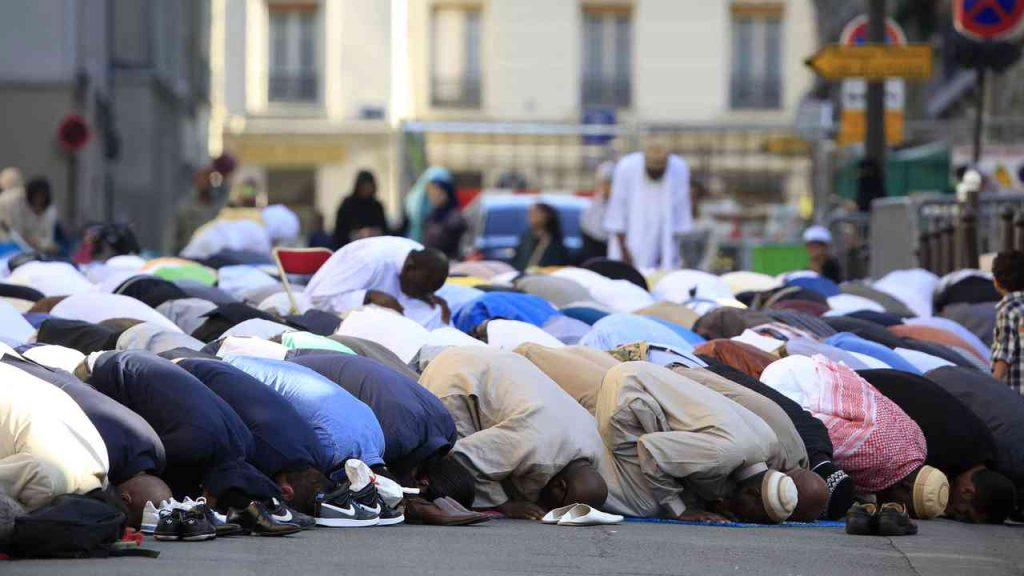
One issue now causing headaches for those governing in Berlin is the attitude toward Israel and Palestine. The Turkish minority, traditionally strongly pro-Palestinian, has grown increasingly vocal in its criticism of Benjamin Netanyahu’s government and its policy toward Palestinians after the bloody massacre carried out by Hamas on October 7, 2023, and Israel’s brutal response.
Much of Germany’s wider Muslim community has reacted in a similar way. Berlin has to take this into account, and recently we have seen Chancellor Merz’s government slightly harden its position toward Israel. For many, this comes as a shock. After all, for many decades the Federal Republic of Germany more or less unconditionally supported the actions of the Jewish state, seeing that support as a “moral duty” connected with the Second World War and the Holocaust.
A similar political mechanism appears on the other side of the Rhine. In France, too, members of diasporas from Muslim-majority countries are much more inclined to vote for left-wing parties. The far left associated with Jean-Luc Mélenchon enjoys particular popularity among them. It courts, in every possible way, people of Algerian, Moroccan, and Tunisian origin, who already make up around 10 percent of France’s population.
In some polls, Mélenchon is already brushing against the second round of the presidential election. If that happened, he would enter it against Marine Le Pen, who already seems firmly placed for the runoff. Although the far left is usually associated with support for sexual minorities and various social “novelties,” which traditional Muslim voters do not accept, Mélenchon emphasizes other points in his party’s program: “opposition to religious discrimination,” for example — he stresses that, in his view, Muslims face unfair treatment in France — and “multiculturalism instead of assimilation.”
In the case of France’s Maghrebi diaspora as well, the Israeli-Palestinian issue plays a key role in Paris politics. Since 2023, French authorities have criticized Israel more sharply over the massacres carried out in the Gaza Strip, knowing that this criticism resonates strongly with this particular segment of voters.
Iceland offers an interesting case on the European map, because its largest national minority consists of Poles. In a country of about 380,000 inhabitants, around 30,000 Poles live there, according to various sources, or about 8 percent of the population. Poles also make up more than one-third of all immigrants living in Iceland. Such a significant minority naturally forces local authorities to take the Polish perspective into account.
The presence of the Polish community in Iceland influences the country’s foreign policy. Contacts with Poles at home make Icelanders increasingly appreciate the role of Poland and the entire region of Central and Eastern Europe,
– Dr. Molly Krasnodębska explained in the magazine Wszystko co Najważniejsze.
In recent years, political contacts at the highest level have intensified. Economic cooperation is developing in new areas, such as ‘green’ energy.
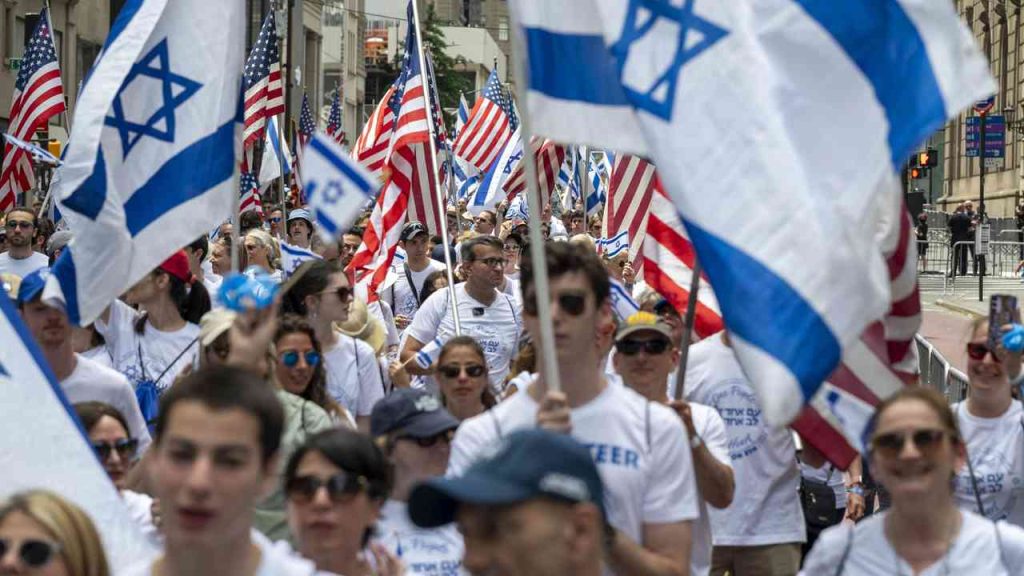
The Jewish community in the United States represents a separate, special case in the context of diasporas with powerful influence. Of the roughly 7 million Jews living in America, only a fraction, around 200,000 people, are immigrants from Israel. Yet there is no shortage of evidence that a large number of American Jews strongly support the greatest possible American engagement on Israel’s side.
In American politics, AIPAC, the American Israel Public Affairs Committee, enjoys an almost legendary position. In every election, it spends a fortune supporting candidates who present a pro-Israel position and fighting politicians who criticize Israel.
AIPAC’s financial base consists mainly of American Jews, though evangelical Christians also contribute generously to this cause. During the congressional campaign, AIPAC and allied pro-Israel groups spent tens of millions of dollars opposing just two Democratic candidates, Jamaal Bowman and Cori Bush, who had become known as sharp critics of the Jewish state. They did so effectively: neither now sits in Congress.
Critics of the Jewish community’s influence on Washington policy point to the current war in Iran as its most spectacular example. Successive American presidents had said a firm “no” to such ideas until Donald Trump, as The New York Times described in detail, yielded to pressure from the Israeli government as well as the pro-Israel lobby in the United States.
In the autumn congressional elections, AIPAC’s main opponents will be all those members of Congress who support eliminating the annual subsidy of more than 3 billion dollars for Israel’s armed forces. Such politicians can now be found not only in the Democratic Party, but also among Republicans. The politicians targeted by AIPAC emphasize that such enormous sums transferred every year from the pockets of American taxpayers symbolize the unhealthy scale of pro-Israel lobbying influence in the United States.
Diaspora politics therefore works most powerfully when numbers meet discipline, money, geography, and a clear demand. A small group does not need to become a majority to shape policy. It needs to matter in the right place, at the right moment, and in a system where one mobilized electorate can change the cost of a decision.
Read this article in Polish: Małe grupy, wielka polityka. Jak mniejszości zdobywają wpływy


Journalist with a degree in American studies, writing mainly about foreign policy and history. Author of numerous reports on international issues and interviews with leading experts in the field of economy, geopolitics and history. Since March 2023, editor-in-chief of the monthly "Historia Do Rzeczy".



Zmień tryb na ciemny