Humanism
The Freedom to Choose, the Fear of Choosing
29 September 2026





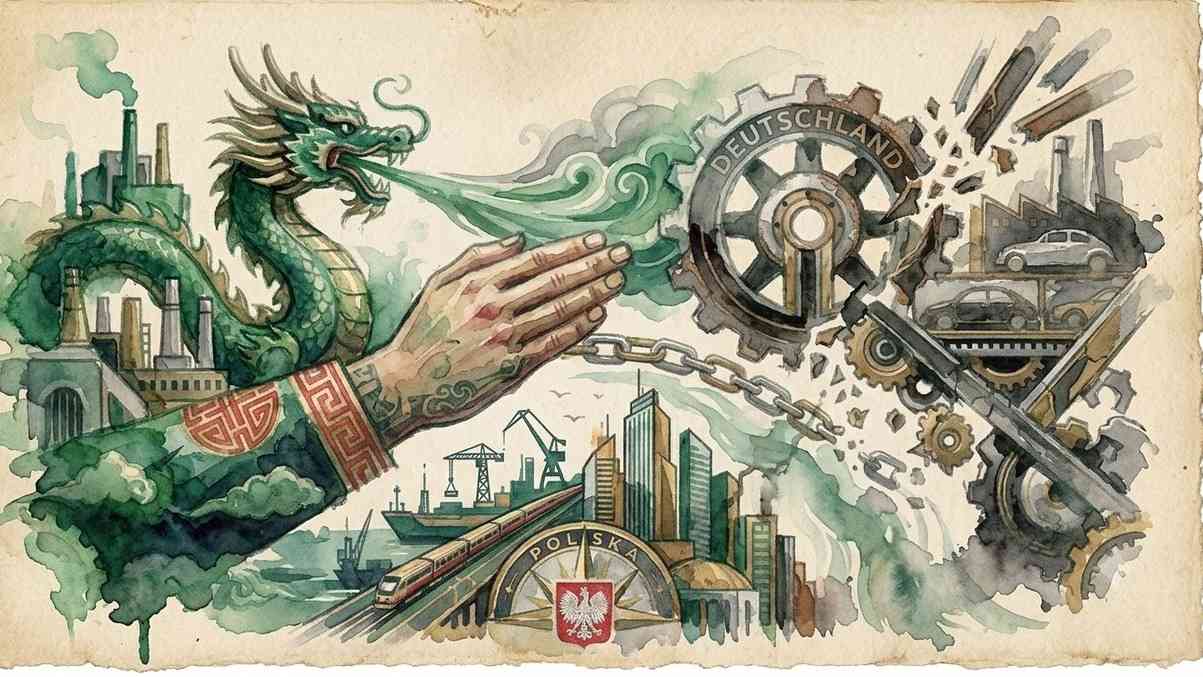
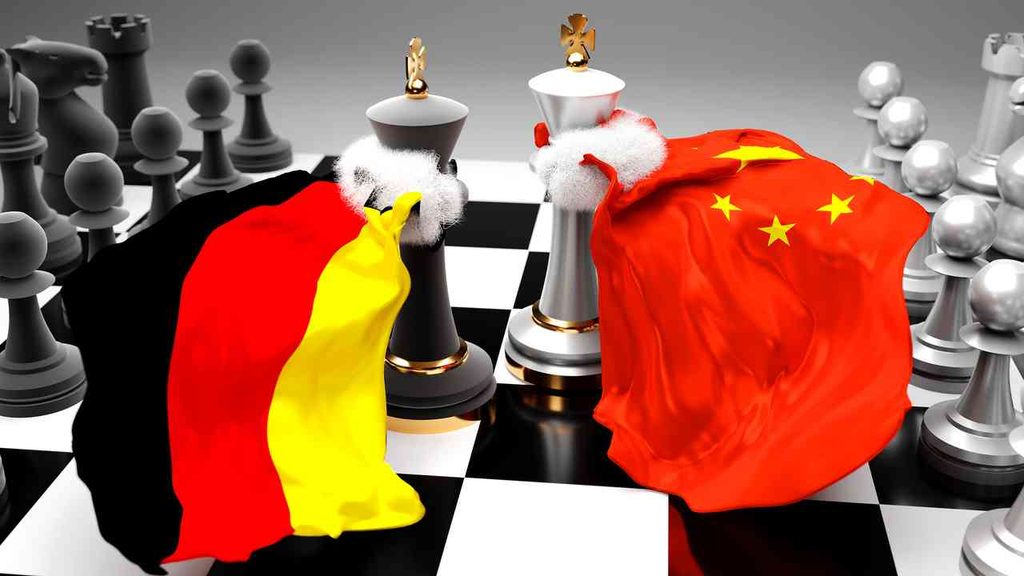
Chinese competition in Europe is no longer about a flood of cheap products. Today, China’s expansive export policy strikes at the foundations of the European economy. The effects are most visible in Germany, an economy whose model long rested on exports. China now operates according to that same model, and the world is too small for two export champions; one of them will have to give ground.
As ZPP and OSW note in their report Poland – Europe – China: Cooperation or the Trap of Dependence?, when China joined the World Trade Organization at the beginning of the 21st century, the West gained access to a vast market of cheap labor. In Europe and the United States, analysts began speaking of the first “China shock.” It primarily affected simple branches of industry, such as textiles, toys, and basic electronics.
Today, the situation looks completely different. China is no longer merely the “factory of the world” producing goods on behalf of Western corporations. The Middle Kingdom has become their most dangerous competitor. The report’s authors state bluntly that China shock 2.0 is hitting Europe’s industrial core, including the automotive, machinery, and chemical sectors, as well as technologies linked to the energy transition. This means that Europe is losing ground in industries that were supposed to form the basis of its development and future growth.
Foreign companies, including Western ones, counted their profits happily while supplying the knowledge, capital, and technology that later strengthened China’s domestic production capacity. In doing so, they handed China the proverbial Leninist rope with which their rivals would be hanged. The consequences of that strategy show up most clearly in the numbers. China’s trade surplus has already exceeded one trillion dollars a year, and according to the report’s authors, around 87 billion euros in added value “escaped” from the European economy to China in 2025 alone, including 11 billion euros from Poland.
It is also worth noting that Europe’s dependence on Chinese components, batteries, rare earth metals, and pharmaceuticals is becoming an increasingly serious problem. In the case of pharmaceuticals, dependence on products from China can exceed 90 percent.
No European state has built its economic position on industry and exports to the same degree as Germany. For many years, this model seemed ideal. German companies produced high-quality goods and sold them around the world, especially on China’s fast-growing market. Today, their most important customer has also become their most dangerous competitor.
Yet, as Wolfgang Münchau, the former editor-in-chief of Financial Times Deutschland, argues in his widely discussed book Kaput: The End of the German Economic Miracle, Germany’s crisis does not stem from the war in Ukraine, the pandemic, or high energy prices. It is the result of strategic mistakes made over several decades.
Münchau sees the greatest problem of the German economy in management elites closely tied to politics, elites that cannot respond systemically to new challenges, including the second China shock.
The problem deepens because Germany remains a wealthy country that spent many years limiting expenditure and pursuing a balanced budget. That means the German state has enough resources to keep making these mistakes. The question is how long Germany, under pressure from the second China shock, can absorb the consequences of its own errors.
The most spectacular symbol of the changes taking place in the German economy today is Volkswagen. Just a decade ago, the company stood as a model of efficiency and industrial power. Today, it faces falling sales in China, growing competition from producers such as BYD and Geely, high production costs in Germany, and the need for an expensive shift toward electromobility.
Of course, the company remains one of the world’s largest carmakers. Yet sales of VW-group cars have fallen over the past several years from almost 12 million to just under 9 million cars a year. The Chinese factor matters greatly here. A few years ago, that market accounted for a large share of VW’s profits. Today, Chinese brands have not only begun to dominate their domestic market, but are also moving ever more boldly into Europe. This is especially visible in the electric-car segment.
On 9 July 2026, VW’s supervisory board met and announced restructuring, as well as a reduction in the number of models and available variants. Earlier, German media had reported plans to cut as many as 100,000 jobs. As the German trade union IG Metall noted, that is almost twice as many as in Detroit, the collapsed capital of the American automotive industry.
Workers staged a large protest in front of VW’s headquarters in Wolfsburg. For now, the board has not made binding decisions on job cuts. VW’s management knows the company faces a painful collision with new realities. But since the board includes both representatives of the state of Lower Saxony and employee representatives, the company cannot make rapid cuts. Delaying inevitable structural changes will make them even more painful in the future.
Given that even the most prestigious R&D jobs are “escaping” from Germany to Hefei in China, but also from Hanover to VW’s plants in Poznań, more cynical commentators say that soon no one will remain at VW in Germany except the trade unions.
This exodus of specialist jobs also offers a good example of what Münchau wrote about. Germany’s own structure cannot generate sufficient innovation, so the company has to rely on a different environment, a different and more fertile soil in which innovation can grow.
It is worth adding that Volkswagen’s crisis shows, as if through a lens, the broader problem of the German economy, which does not concern this brand alone. Profits are also falling at premium carmakers such as Porsche, Mercedes, and, to a lesser extent, BMW. The situation in the machinery industry poses an even greater challenge, with orders falling for two years.
German automotive manufacturing consists of around 3,000 companies employing 900,000 people. By contrast, the machinery industry includes as many as 15,000 companies employing 1.3 million people.
Successive German governments are, of course, aware of the scale of the challenges facing the country. During Olaf Scholz’s government, Economy Minister Robert Habeck of the Green Party limited state support for German companies investing in China. That government action did not, however, reduce German companies’ activity on the Chinese market. For example, the chemical giant BASF is carrying out record investments in China worth 10 billion euros while cutting jobs in Germany.
The challenges facing German industry and exports may provoke a degree of Schadenfreude among some observers in Poland. This is especially true because Polish and German business cycles have been diverging for some time. Years of stagnation in the German economy have not translated into similar stagnation in Poland, while Germany may look with envy at the pace of Polish economic growth.
Nevertheless, Germany remains Poland’s largest trading partner and receives almost one third of Polish exports, although that share has recently fallen from 28 to 26.8 percent. Polish companies are deeply embedded in German supply chains, especially in the automotive, machinery, chemical, and household-appliance sectors.
There is no way to ignore the fact that when German factories reduce production, fewer orders also reach Polish subcontractors. A slowdown in Germany therefore means lower exports, lower investment, and weaker economic growth in Poland. This remains less visible only because Polish exports are highly diversified and Polish companies show considerable flexibility. Many are already trying to diversify their export destinations. Perhaps this is precisely where the recent decline in Germany’s share of Polish exports came from.
At the same time, it would be a mistake to assume that the problem concerns Berlin alone. Polish companies are also feeling the pressure of Chinese competition more clearly. As many as 71 percent of entrepreneurs assess its impact on the Polish economy negatively. The sectors most at risk include automotive manufacturing, battery production, household appliances, and steel, while 45,000 jobs in Polish industry may be threatened. That is still several orders of magnitude less than in Germany, where 300,000 industrial jobs have disappeared in recent years, but the direction of the trend is clearly the same.
These challenges affect other countries in the region even more strongly, of course: the Czech Republic, Slovakia, and Hungary. The Czechs may have particular reasons for concern about the possible cannibalization of the Škoda brand by the VW group, and about the transfer of adjustment costs onto Škoda as the company navigates transformation.
There is, however, another side to Germany’s problems, one that offers Poland and other countries in the region an opportunity. As in the case of the move from Hanover to Poznań, one can expect that some German companies trying to preserve their competitiveness will consider relocating to one of the countries in Central and Eastern Europe.
In this case, Poland’s partners in the Visegrád Group become competitors, especially when it comes to the most prestigious and best-paid R&D jobs. This is another, and in a sense paradoxical, face of China shock 2.0, one from which Poland may benefit.
The hope is that, in this case, the Polish economy and Polish entrepreneurs will show greater creativity and flexibility than their German competitors, and that Poland will make use of the opportunities created by Germany’s economic problems. In the end, Chinese competition in Europe is not only testing Germany’s industrial model; it is also forcing the entire region to decide how quickly it can adapt.
Read this article in Polish: Chiny uderzyły w niemiecki przemysł. Polska też to odczuje

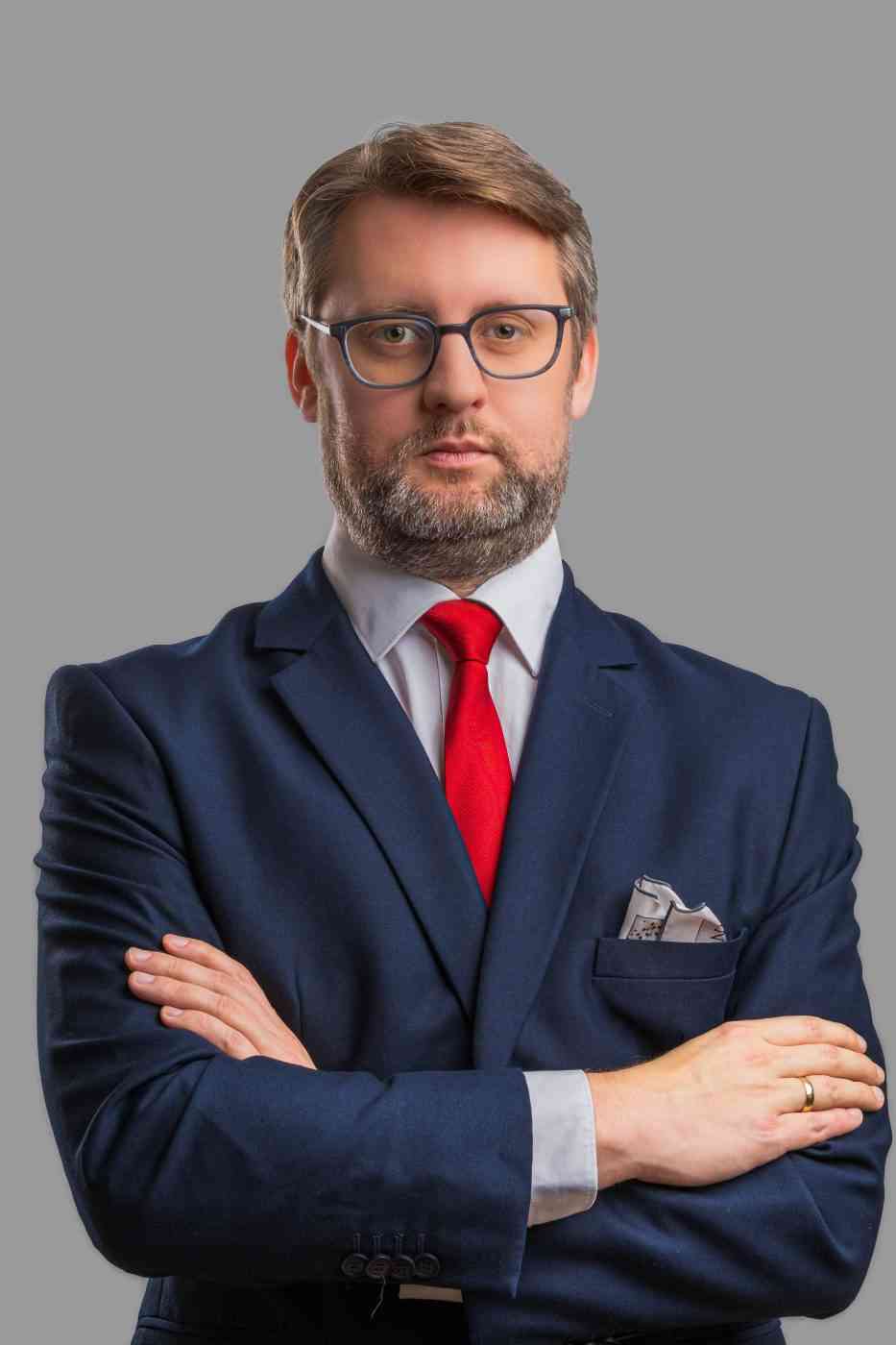
He analyzes the economic condition of the Federal Republic of Germany and Austrian politics. He gained professional experience in Poland, Austria, Germany, and Belgium, working in academia and European institutions. He is an assistant professor at the Department of German Studies at the Institute of Political Studies of the Polish Academy of Sciences, and head of the Germany: State–Economy–Security team at the Institute for Western Affairs.

Zmień tryb na ciemny